The other day I lined up two iPhones on my desk—one on a 20W cable, one stuck to a magnetic wireless charger. Half an hour later the cabled one was past halfway; the wireless one had just crept over 40 percent. That is when it really hit me: wireless charging is genuinely convenient, and genuinely slower. But how much slower depends on whether you are at 15W or 25W, and on how full you actually need the battery.
Q: How many minutes slower is wireless charging than a wired fast charger?
A: The gap shows up mostly in the 0 to 50 percent stretch. On an iPhone 15, a 20W wired charger reaches half in about 30 minutes, while a 15W MagSafe puck typically needs 45 to 60 minutes. Full charge is even clearer: roughly 90 minutes wired versus over two hours wireless. But the new Qi2 25W chargers from 2026 close that gap—in Belkin's own internal tests, an iPhone 16 on Qi2 25W hits 50 percent in just 29 minutes, basically matching a 20W cable.
Q: So should I just switch to a Qi2 25W charger and ditch the cable for good?
A: Not so fast. 25W wireless does catch up to 20W wired, but the moment you want 30W, 45W or more, wireless is still far behind. A Galaxy S25 Ultra on 45W wired hits 50 percent in about 18 minutes; on Qi2 15W wireless it is closer to 48 minutes. There is another catch people miss: with wireless, power has to cross an air gap as a magnetic field and turn back into electricity, so efficiency usually lands at 60 to 80 percent—and the rest becomes heat. For a 10-minute top-up before you run out the door, the cable is always the safer bet.
Q: Does the extra heat from wireless charging actually wreck the battery?
A: Heat is the real issue, not wireless itself. Multiple tests show that at the same charge level, a wireless pad runs the phone 3 to 5°C hotter than a cable—some hit 40°C. When the phone gets warm it throttles the power on its own, which actually makes charging slower. To keep it in check: pick a wireless charger with active cooling or precise magnetic alignment, because the better the coils line up, the less is wasted; and do not charge in direct sun or under a thick case. The practical play is to treat wireless as your slow overnight or desk charger and save the cable for emergencies—better for the battery than obsessing over which is faster.
Q: For everyday use, just tell me straight—what should I actually buy?
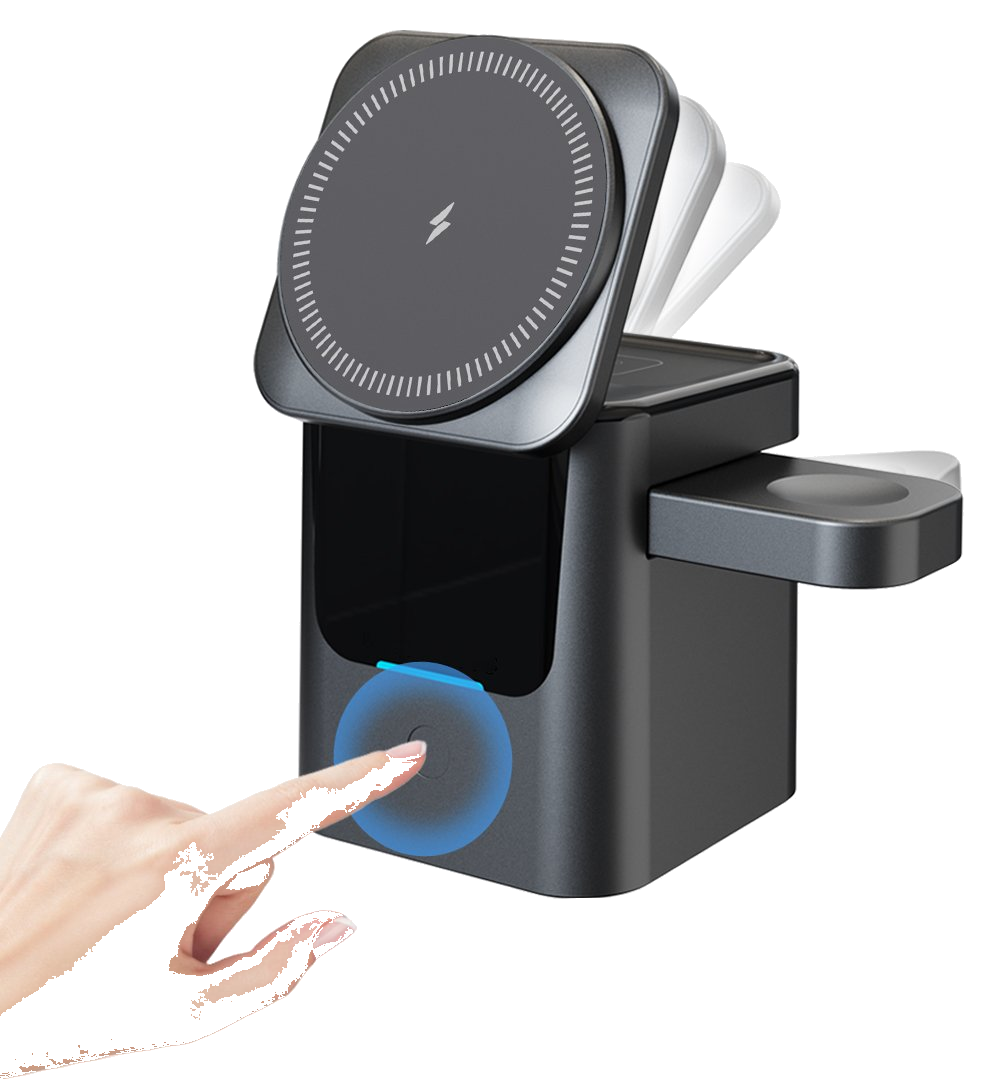
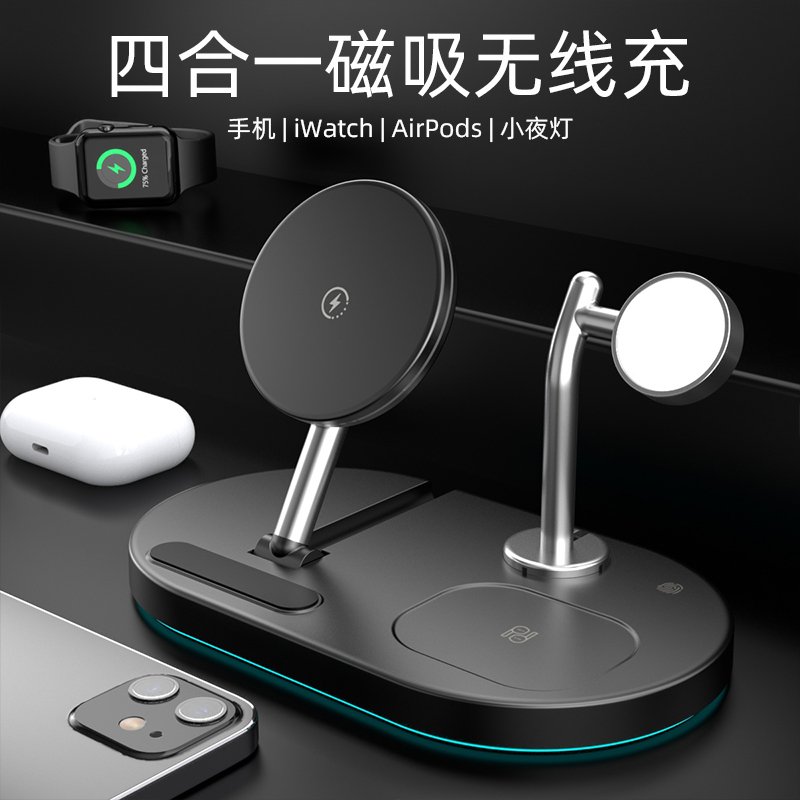
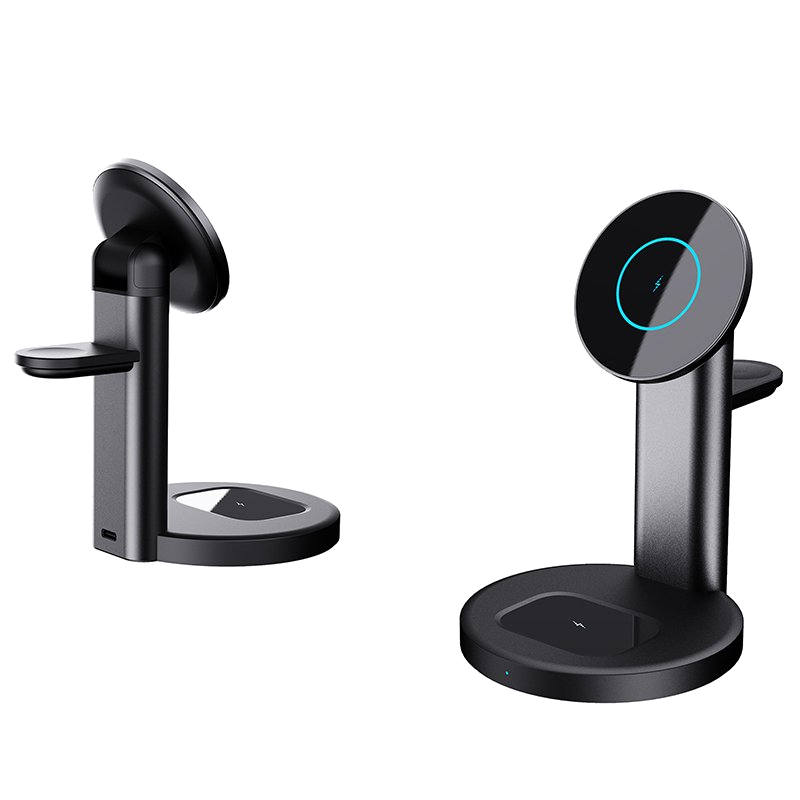
A: Decide by scenario, not by wattage. For a bedside table or desk where the phone sits for hours, a magnetic wireless charger or a 3-in-1 wireless charger is the lowest-friction option—phone, watch and earbuds just drop on. The hidden wireless chargers built into café and restaurant tables work the same way; a quick drop beats hunting for a cable. But if you have 20 minutes before leaving or need to rescue a dying phone in the car, plug in. My setup: a magnetic wireless charger permanently on the desk, and a 30W cable always in my bag. They are not either/or—they are a team.
Bottom line: wireless and wired charging are not rivals, they are a division of labor. Give the slow but effortless option to your desk and nightstand, and save the fast but fiddly cable for when you are in a hurry, and the battery anxiety mostly takes care of itself.
This article is originally published by Shanwu. Please credit the source when reposting.
Copyright © 2026 Shanwu. All Rights Reserved.