Q: Why are Qi2.2 magnetic chargers suddenly everywhere you look — online shops and gadget stores are suddenly flooded with 25W magnetic pads?
A: The numbers tell the story. According to the Wireless Power Consortium's public certification registry, products certified to Qi2.2 — the 25W magnetic tier of Qi2 — reached 521 by the end of January 2026 and climbed to 637 by February, a near 90% jump in two months. Wind the clock back to late 2024, when the standard first shipped, and the certified count was still in the low double digits. Hundreds of new SKUs in roughly half a year is an unusual slope for a category that lives and dies on manufacturing yield.
Q: How did hundreds of brands ship compliant products almost at once?
A: It wasn't one factory suddenly getting good. It was a batch of wireless-power chip vendors maturing "turnkey" modules. Companies like NuVolta began shipping Qi2.2 modules in early 2025 that bundle the 25W MPP magnetic profile, 15W EPP, coil driving, and thermal logic into a single small package. An accessory maker can drop it in without redesigning the board from scratch. Bringing up a Qi2.2 product used to mean months of EMC tuning and certification; now it's weeks to a working sample. Lower the bar, and makers of chargers, cases, and desk gadgets all pile in.
Q: Even with good modules, doesn't a fragmented standard spoil it?
A: That's the other half of the story — Qi2.2 removed friction in three stages. Qi (EPP) brought 15W interoperability in 2015, answering "will it charge at all." Qi2 added the magnet array in 2023, answering "did I set it down right." Qi2.2, late in 2024, raised the ceiling to 25W and, for the first time, set a hard rule for the high-power tier: surface temperature at 25W output must stay below 40°C, and magnetic alignment tightened to ±0.5mm. Each step killed a consumer doubt, turning wireless from a convenience into something you can lean on daily.
Q: What does this mean for people in production and sales?
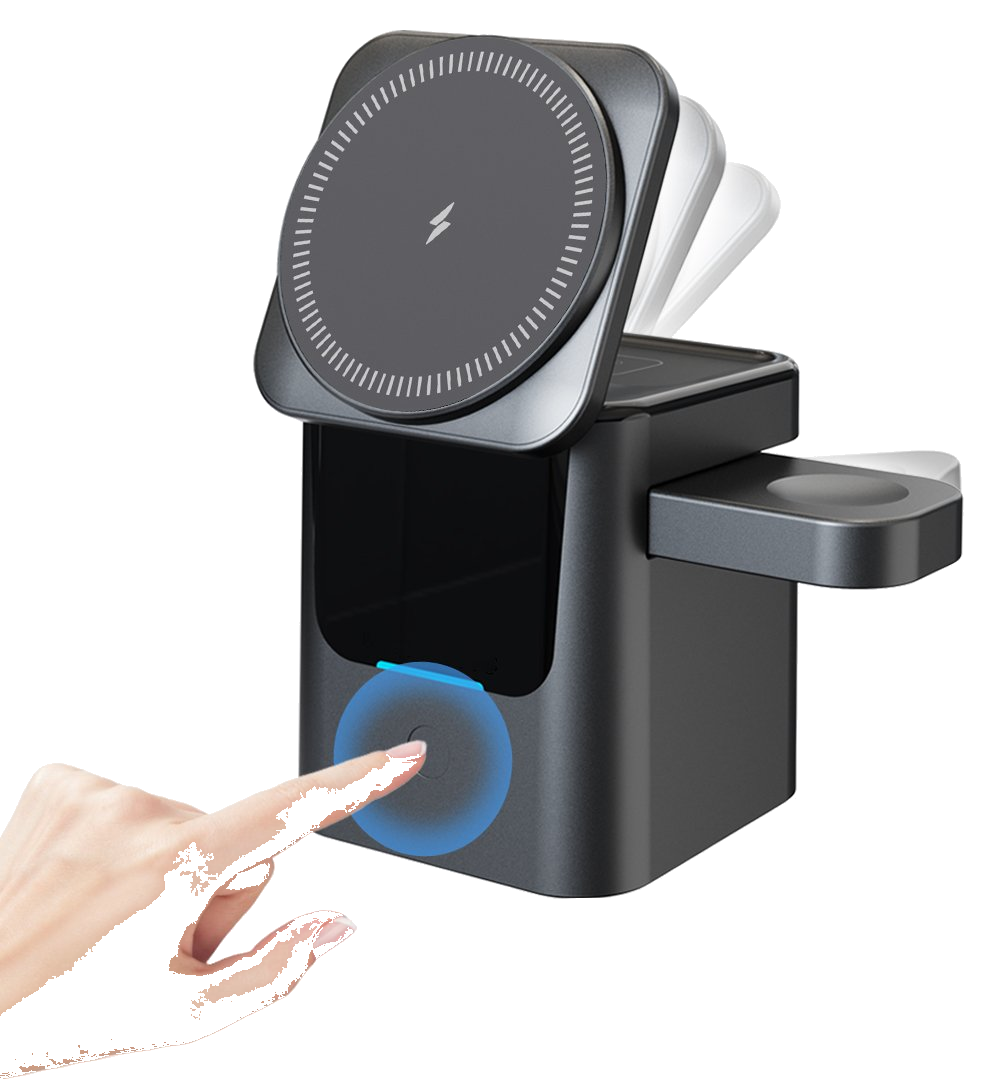
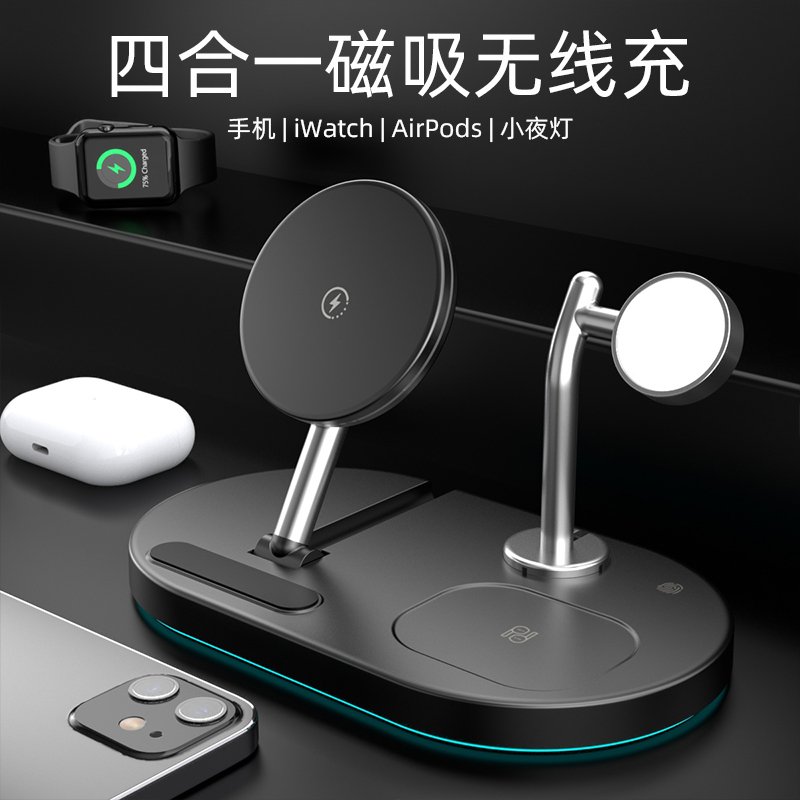
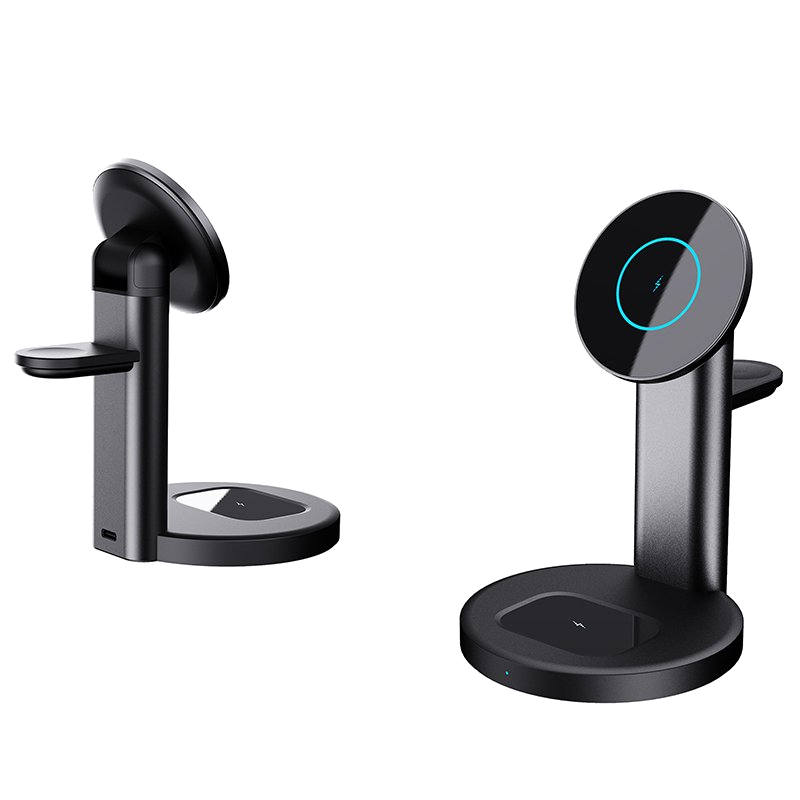
A: Modularization and standardization straighten the whole chain of design, customization, production, and sales. Smaller factories once had to either keep a radio-frequency team on staff or buy an expensive solution and certify it themselves. Now that upstream suppliers lay out modules and reference designs, OEM and ODM shops can take orders for private-label units, gifts, and the home and public-space wireless chargers showing up in hotels and offices far faster. That's why you see more multi-device wireless charging pads in airports, hotel chains, and co-working spaces — supply moved first.
Q: As a buyer, what does this supply boom actually change for me?
A: The most direct effect is price. 25W magnetic pads have fallen from early-adopter pricing to something far more approachable. One caveat: a certified count and what's on the shelf are not the same thing. A box that says "Qi2.2" is not automatically a product that passed WPC certification. Look for the actual Qi2.2 certification mark and a Qi-ID; that beats trusting the wattage printed on the box. The real differences — magnetic snap, thermal throttling behavior — only hold up on genuinely certified products.
Q: Can this momentum hold?
A: The certification cadence says the inflection is real. WPC now has more than 300 members, and cumulative Qi-certified products across all generations have passed 13,000. 25W is becoming the default on new flagship phones. Upstream modules keep cutting cost while downstream demand from hotels, carmakers, and offices absorbs the output, so magnetic wireless charging looks set to grow from a phone accessory into a near-invisible energy interface. For users, picking Qi2.2 next time is a safe bet; for makers, the game shifts from "can we build it" to "whose design and experience is finer."
This article is originally published by Shanwu. Please credit the source when reposting.
Copyright © 2026 Shanwu. All Rights Reserved.