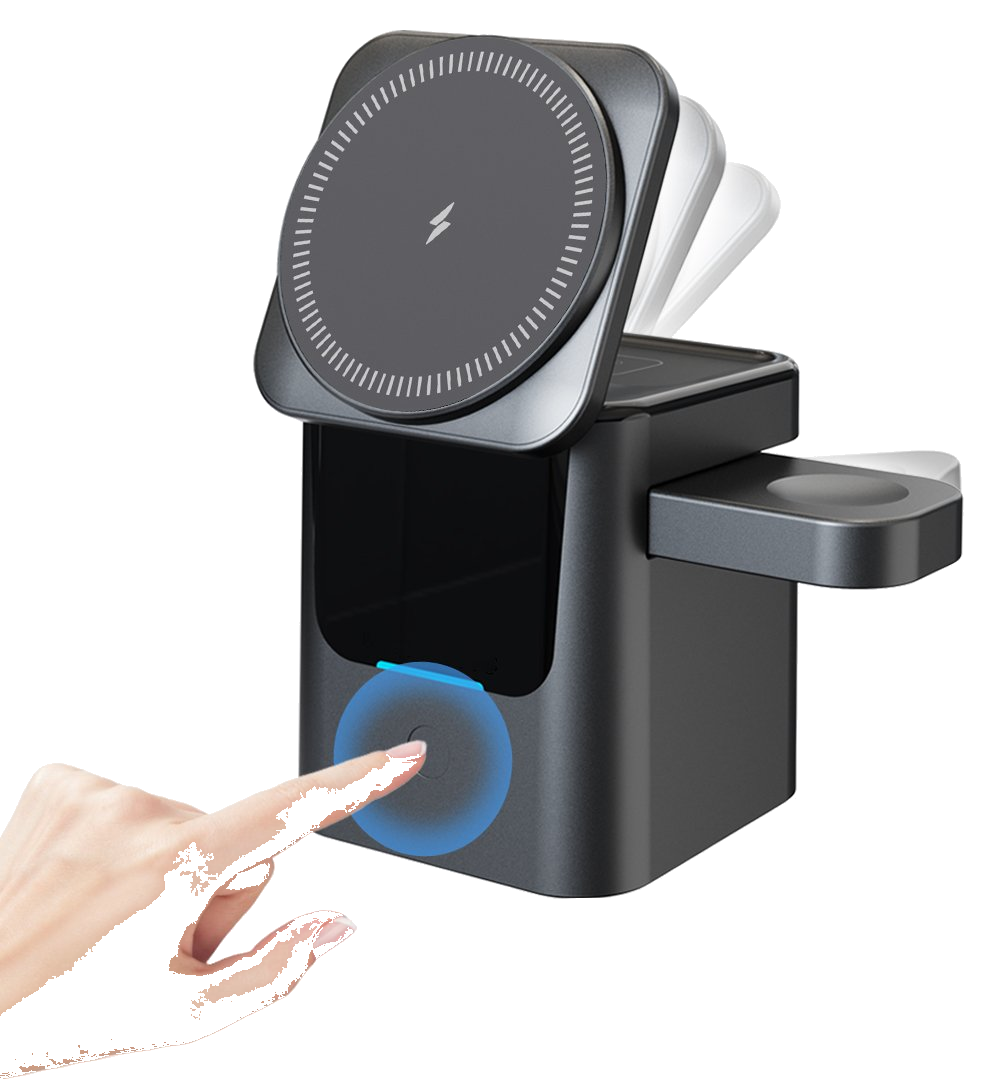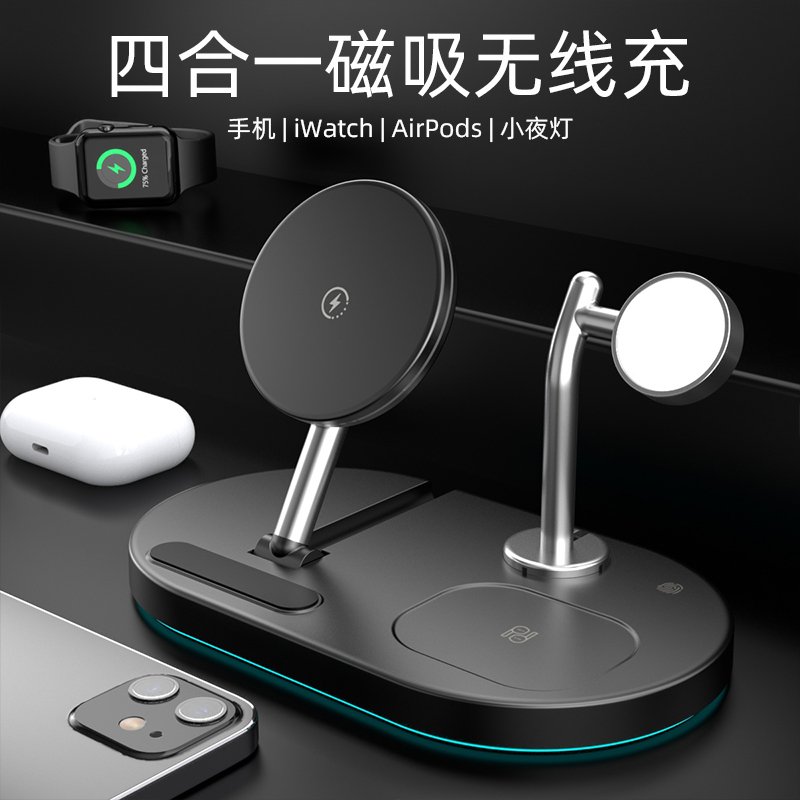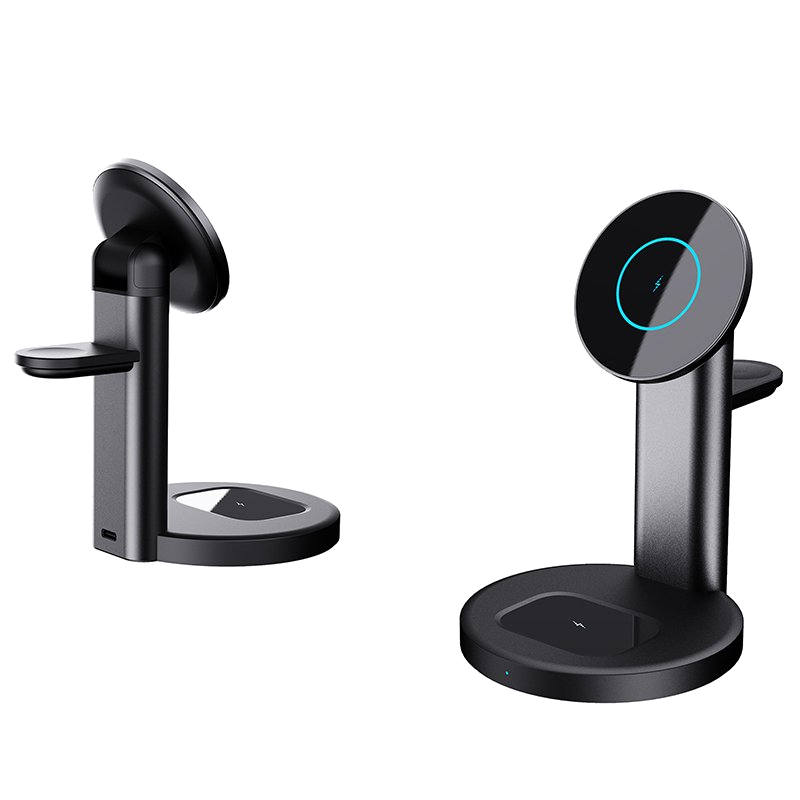
That wireless charging pad on your nightstand has been there for two or three years, and lately it feels slower. Most people only replace it once it stops charging altogether, but the wear inside builds up quietly, and you can usually spot the signs half a year early. The short version: a well-built wireless charger can easily last five to seven years of normal use, while a cheap no-name pad may start losing speed within two or three.
Let's start with what the makers themselves guarantee. Apple's MagSafe charger carries a one-year warranty, Belkin's BoostCharge line gives you two, and Anker's magnetic wireless chargers are mostly covered for 24 months, with other models at 18. Warranty isn't lifespan, but it's the maker's own floor — once you're past it, trouble starting to show is completely normal.
There are no moving parts inside, yet components still age. The classic culprit is the capacitor: running above 40°C for long stretches dries out the electrolyte and raises its internal resistance, so the output gets unstable. Next is solder-joint fatigue — daily heating and cooling eventually cracks weak joints in cheap assemblies. Then there's coil-insulation breakdown and dried-out thermal pads, which trap heat and drag efficiency down. Put simply, heat is the real killer of any wireless charger.
So how many years, really? Independent teardowns and accelerated-aging tests suggest a range: a solidly designed pad using GaN switching can reach 4,500–6,200 cycles — roughly six to eight years of daily use — while an old-school silicon pad with no active cooling may drop to 80% efficiency after just 1,200–1,800 cycles, about two to four years. At 250–350 equivalent cycles a year for most users, a good pad hitting five to seven years is common. Key word: that's a range, not a promise.
When is it time? Watch for four signs. First, the same phone at the same battery level now takes noticeably longer to fill, with delivered power down more than 15%. Second, the coil area gets scalding even at low power — over 65°C to the touch. Third, the indicator stops lighting up, or charging cuts out mid-session and needs re-aligning. Fourth, a bulging case or a burnt smell — retire that one immediately, no debate. Any one of these means it's replacement time.
A few habits buy you extra years. Don't leave it running empty at full charge overnight — unplug or lift the phone once it's full. Keep it ventilated, not buried under books or a pillow. Power it from the original or a certified adapter; a no-name brick with unstable voltage is the worst thing for the pad. With a magnetic wireless charger, snap it aligned before walking away — misalignment is slower and hotter. In public spots, dust and splash protection matters; aim for at least IP54.
The public wireless charging embedded in hotel lobbies, cafés and airport lounges runs 24/7, so its effective life is far shorter than a home unit. Procurement shouldn't be about price alone: require WPC certification and basics like CE/FCC/RoHS, write 'standby-power cap' and 'FOD must be enabled' into the contract, and spec at least IP54 enclosures (IP67 outdoors or in damp areas). At the design-and-customization stage, build in cooling airflow and modular, swappable coils — it saves a fortune in later maintenance.
Bottom line: you don't wait for a wireless charger to die — you replace it once it's old enough to worry about. Buy certified, name-brand gear, and start paying attention around year four or five. For manufacturers, solid lifespan testing and batch quality control are exactly where production and sales investment pays off: a unit that lasts and stays stable is what builds the reputation.
This article is originally published by Shanwu. Please credit the source when reposting.
Copyright © 2026 Shanwu. All Rights Reserved.