Q: What exactly is special about Logitech's new mouse pad?
A: It uses a low-frequency electromagnetic field so a compatible mouse keeps drawing power while it moves, clicks and gets thrown around during intense play — instead of only charging when parked, like most wireless charging pads. Logitech says the charging area is 15% larger than the previous generation, the pad is just 3.5 mm thin, it runs off a USB-A cable, and a small module called the POWERPLAY Coin slots into a compatible mouse. For competitive players the big win is simple: no more scrambling to plug in mid-match because the mouse died.
Q: Why was charging while moving impossible before?
A: Standard Qi relies on coil alignment plus a magnet to lock a device into the sweet spot; drift a few millimeters and efficiency drops, wander too far and it stops. A mouse, though, is sliding, lifting and flicking every second, so alignment is never stable. POWERPLAY lays an electromagnetic field across the whole pad (Logitech's proprietary approach) instead of depending on one precisely placed coil, so the device keeps drawing power while moving. The trade-off is clear: it only works with Logitech's own mice and that Coin — it's not an open standard, and you can't use it to charge a phone or earbuds.
Q: It isn't Qi — so is it even the same family as the magnetic wireless chargers we use every day?
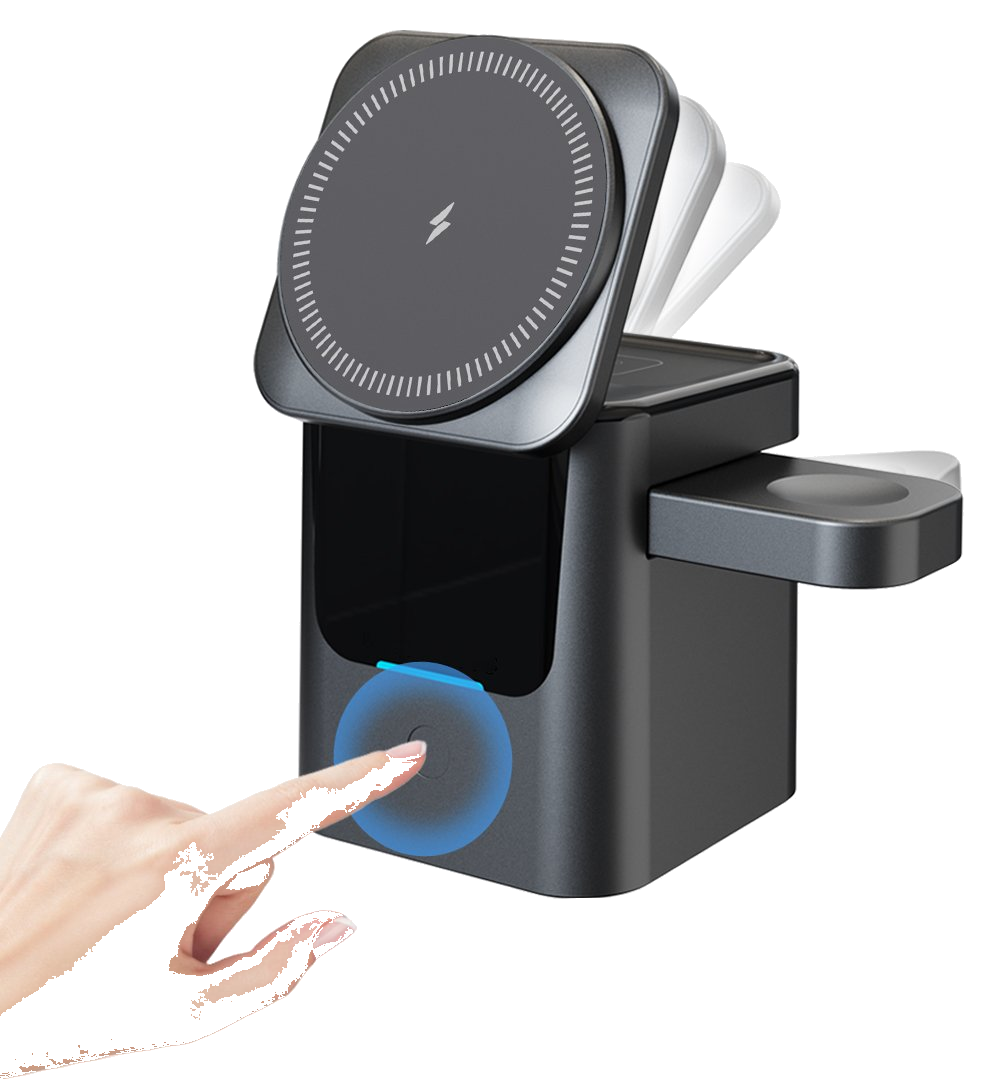
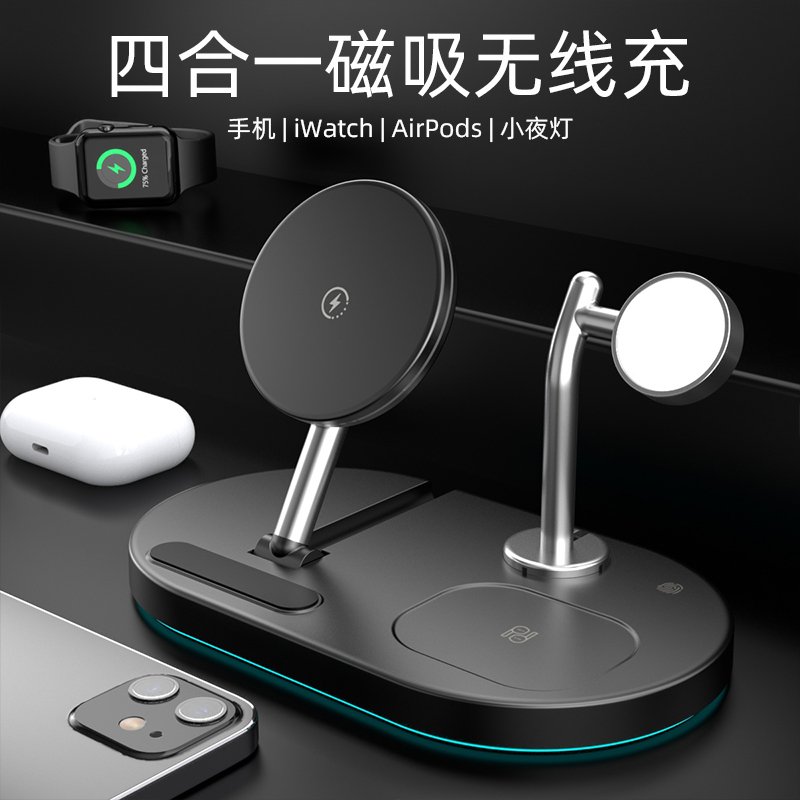
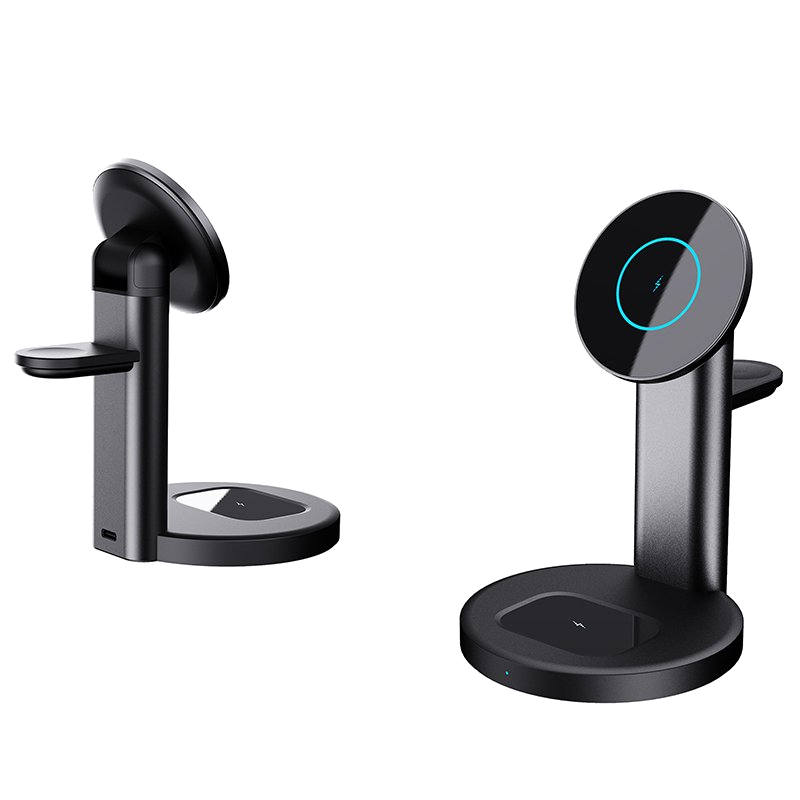
A: The underlying principle is the same: electromagnetic inductive coupling. The magnetic wireless charger on your desk, phone-to-phone reverse charging, even in-car wireless charging all share that root. The only difference is how they hold alignment. Consumer gear follows WPC's Qi and Qi2.2, using a magnet (MPP) to snap the phone into the best spot; Logitech uses a proprietary wide-area field and trades universality for never-drops-while-moving. So don't expect a regular magnetic wireless charger to keep a gaming mouse alive — the moment it slides, the link breaks and the battery stays empty.
Q: What does this mean for everyday users, and beyond gaming mice, where else is this never-stop idea showing up?
A: The most direct payoff is zero battery anxiety — around a dozen Logitech G mice including the G502 and PRO lines are supported, and once the Coin is in, you stop thinking about charging. Step back and you'll see the same thinking wherever a device is always moving yet can't afford to go offline: AGV carts weaving through factories, warehouse inspection robots, gaming desks, and even some medical implants that rely on a body-worn power transmitter. At heart they all use a wide-area field or a tracking coil — just separated by orders of magnitude in power and safety rating.
Q: Will this approach force the Qi standard to change?
A: Not in the short term. Qi and Qi2.2 win on cross-brand interoperability and safety — foreign-object detection (FOD), thermal control, authentication — and they prioritize 'solid when placed' over 'charged while sliding.' Yet POWERPLAY 2's steady momentum through 2026 (listed on Newegg at the end of July, rolled out on momo in August) shows that invisible, never-stop power is a real need, not a gimmick. WPC's own roadmap is also moving toward multi-coil, longer-range resonant schemes — Qi3 points at 50–100W and 'drop it anywhere' within 10–15 mm — so the directions ultimately converge.
Q: If you wanted to build something similar as a custom product, how high is the bar?
A: Consumer-grade magnetic wireless charging modules are mature, and ODM or white-label work can drop an off-the-shelf solution into a mouse pad, keyboard tray or gaming desk without much trouble. The real challenge is hitting three targets at once: stable power while moving, no harm to the device, and passing certification. These bespoke projects lean hard on design and customization — coil layout, shielding, thermal control and FOD strategy all have to be re-tuned per product — and production and sales tend to be small-batch, project-based rather than off-the-shelf volume. In short, making it work is easy; making it work well and stay compliant is where the real skill shows.
This article is originally published by Shanwu. Please credit the source when reposting.
Copyright © 2026 Shanwu. All Rights Reserved.