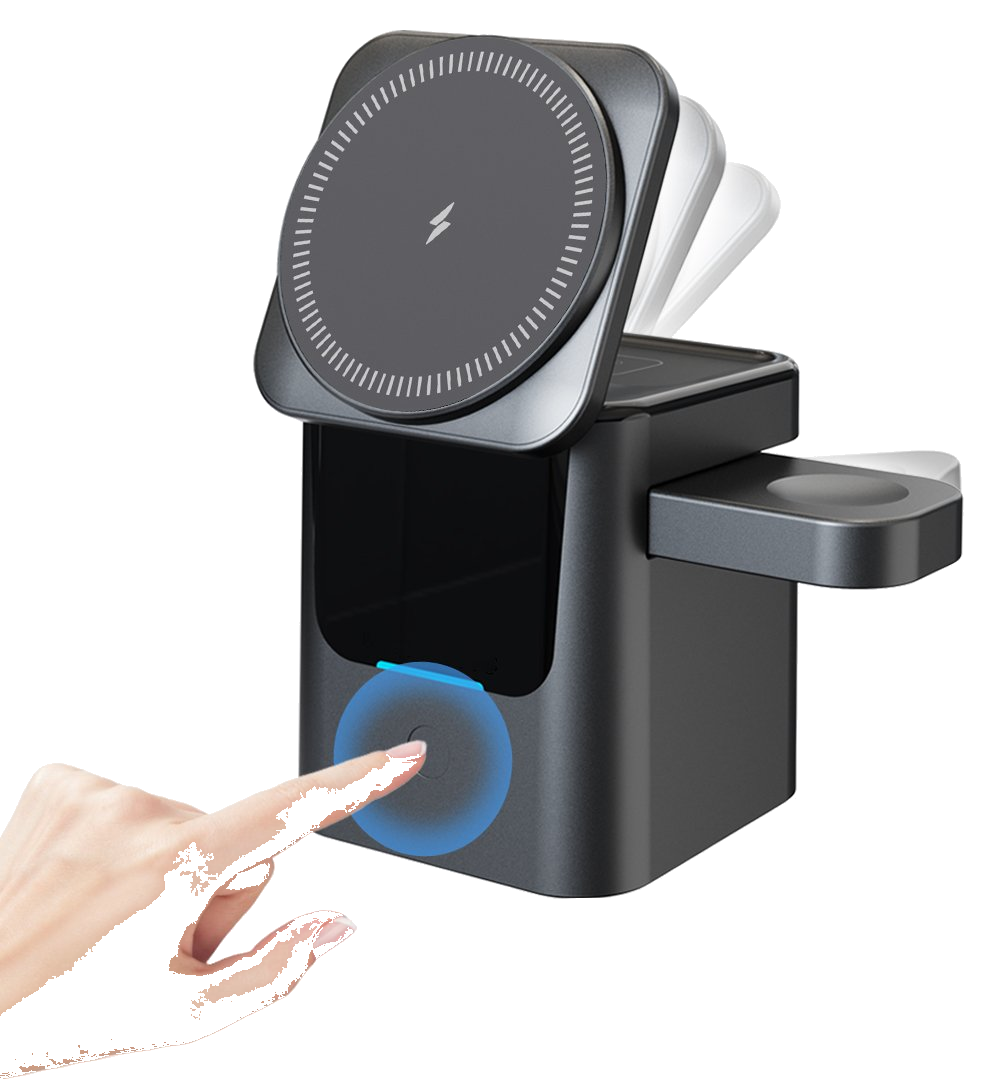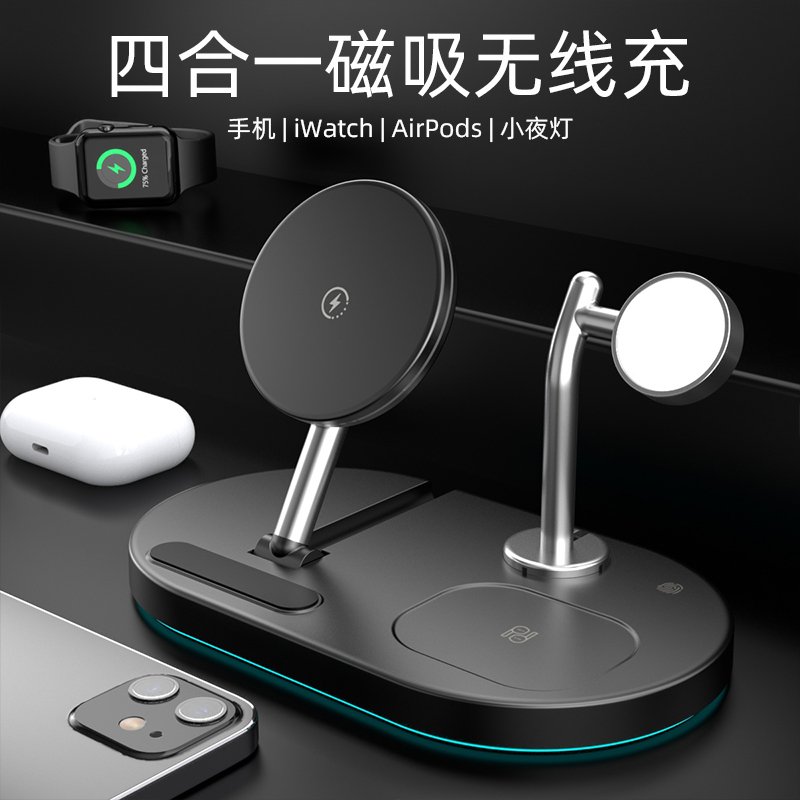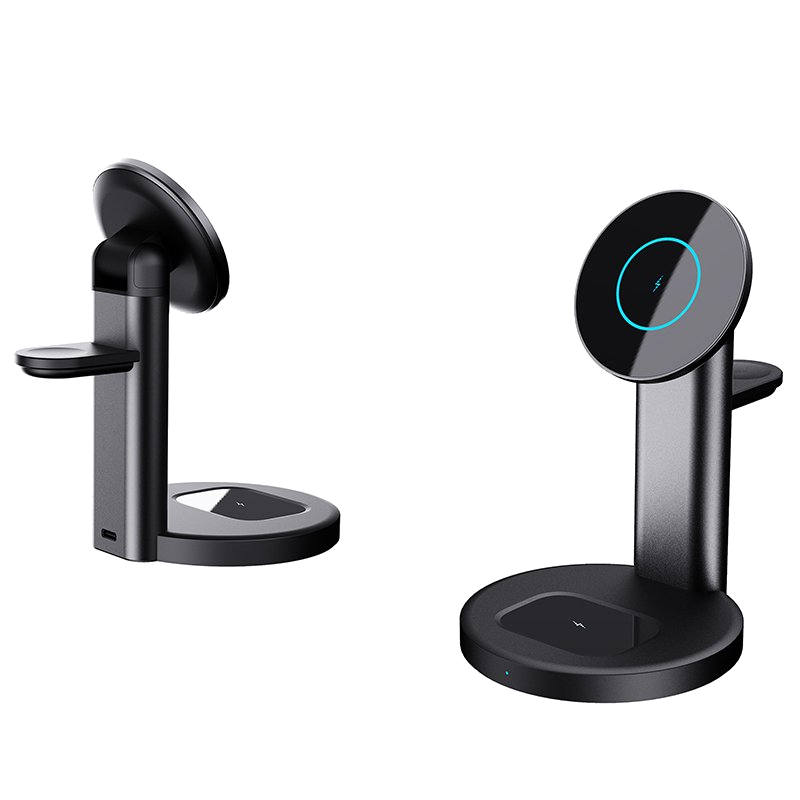
Last week a friend complained that his new wireless charger was useless: the phone gained barely sixty percent overnight and the back was hot to the touch. I told him to take the case off and try again - the next day he apologized. Without the case, the phone charged over 20% in half an hour at normal temperature. The culprit was not the charger, but his leather case with a decorative metal ring. I have seen this so many times that I decided to put the public test data together and talk about the most overlooked variable in wireless charging: the phone case.
Material is the hardest rule. Lab comparisons show that a 0.5mm TPU case only costs you 5%-10% of charging efficiency - barely noticeable. A 0.2mm metal case, however, cuts efficiency by 40%-60%. Note that the metal case is thinner yet far more damaging, because metal reflects and absorbs the alternating magnetic field, effectively building a wall between the transmitter and receiver coils. Cases with partial metal - decorative rings, magnetic card holders - sit in between, losing 15%-30% and often causing the connection to drop and reconnect repeatedly. So rule one is simple: pure silicone, TPU or PC cases are fine; anything with metal parts deserves a question mark.
Then there is thickness. This year a reviewer ran a detailed test pairing one 3-in-1 wireless charging stand with six cases of different thicknesses, and the conclusions are worth writing down. A 0.3mm ultra-thin TPU case held a full 15W with magnetic alignment locking in under two seconds. At 1.2mm, hard PC cases mostly kept full power but small issues appeared - one dropped to 13.6W, another produced a faint hum during long sessions. Above 2.8mm, every rugged case failed: one fell to 7.5W and overheated, another managed only 5W, and a dual-layer case even triggered camera OIS errors. Roughly speaking, 1.2mm is the comfort-zone red line for magnetic wireless charging.
Magnetic cases hide a sneakier trap: snapping on firmly does not mean aligning accurately. Reviewers have measured that an uncertified magnetic case can feel perfectly satisfying when it clicks into place, yet a ring offset of just one or two millimeters drops power from 15W to 7.5W - with no visible symptom at all. The phone still says charging, just twice as slow. That is why I keep telling people who use magnetic chargers or magnetic power banks to stick with MFM-certified cases. The extra cost buys you a magnet ring positioned and rated to spec. Saving money in the middle layer usually means losing charging speed.
Finally, a practical self-check routine. First, the case-off comparison: charge ten minutes with the case and ten minutes without, note the percentage gained each time - if the gap exceeds one third, the case is your prime suspect. Second, watch the heat: if the back feels clearly hotter with the case on, energy is being turned into heat inside that layer, which is bad news for battery longevity, especially for overnight chargers. Third, mind the scenario: many under-desk wireless chargers in cafes and hotels transmit through the tabletop already, and adding a thick case pushes the distance beyond the effective range of the Qi protocol - failing to charge there is physics, not a reason to complain to the barista.
One last tip from a buyer's perspective. Serious wireless charger makers - especially those handling design, customization, manufacturing and sales in-house - will honestly print a line like 'case compatibility <= 3mm' or 'recommended case thickness <= 1.2mm (magnetic)' in the spec sheet. That small line matters far more than the big claims on the marketing page, because it means the coils and thermal limits were actually calibrated for real-world, case-on use. Next time you shop for a multi-device wireless charger, look for that line first. If it is missing, move on to the next product.
本文由山务原创发布,转载请注明出处。
Copyright © 2026山务 . All Rights Reserved.