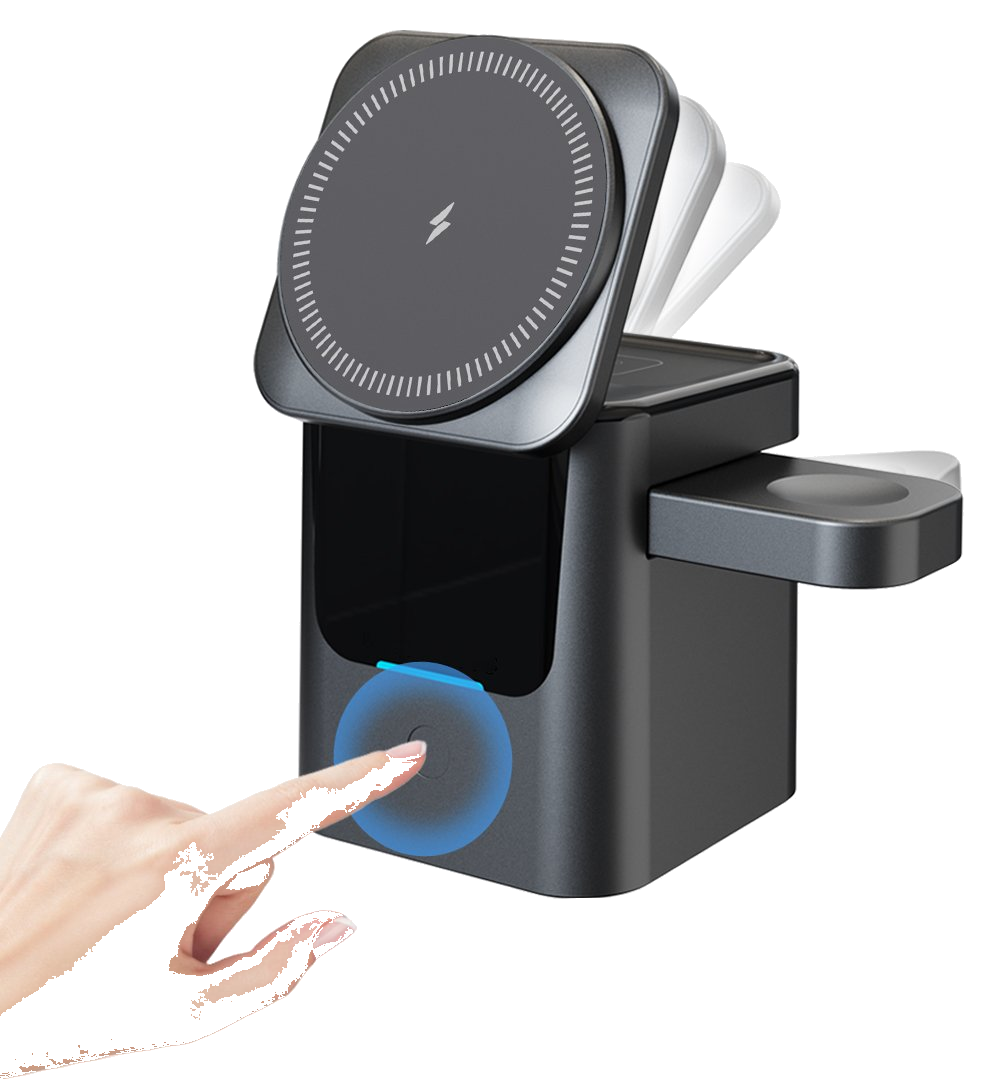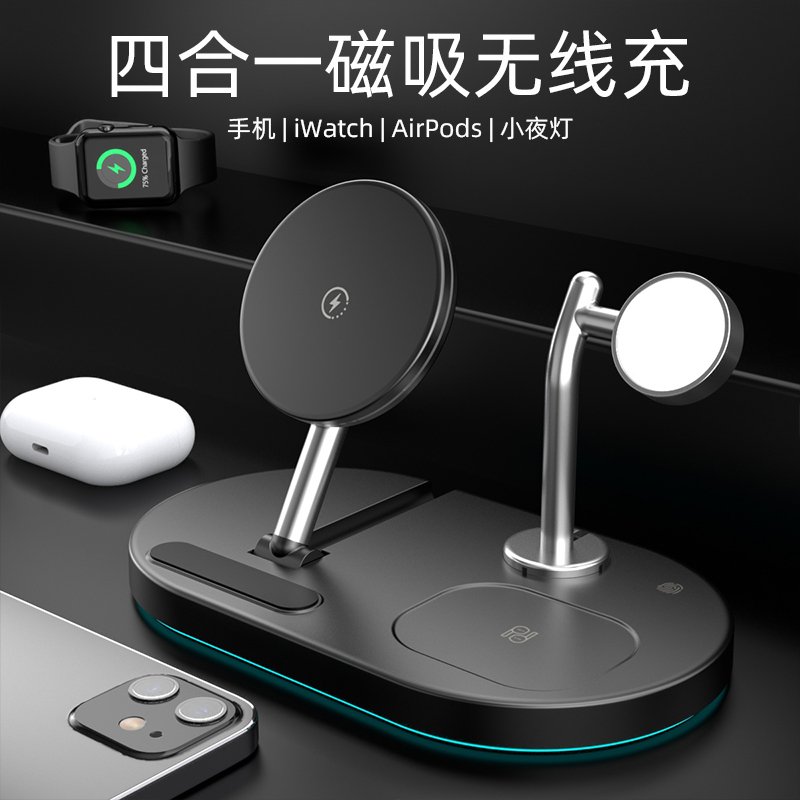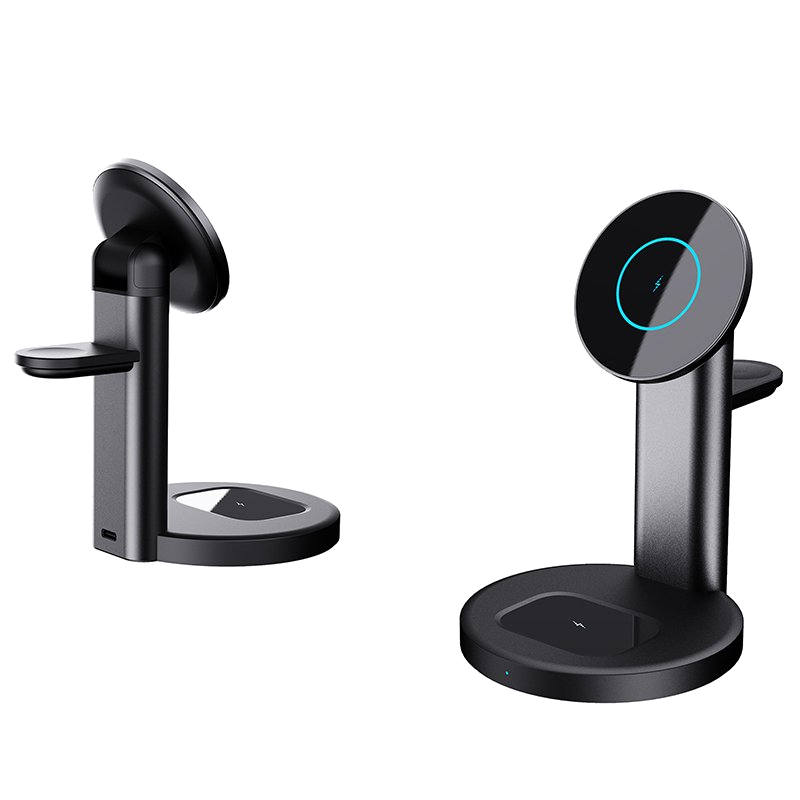
On September 8, Xiaomi officially launched two magnetic wireless power banks in India, and the one drawing the most attention is the 10,000mAh model rated at 45W wired output — the first Xiaomi power bank in India to support Qi2.2 25W magnetic wireless charging. For a market like India, where Android dominates and the vast majority of phones ship without a built-in magnet array, this means magnetic wireless charging is showing up for the first time as a mass-market accessory rather than a premium add-on that only follows the iPhone around.
The two products have a clear split in role. The UltraThin is built for extreme slimness: 5,000mAh, a body just 6mm thick and 98 grams, wireless at Qi2's 15W magnetic rate and 22.5W over the wire, with a silicon-carbon cell doing the work of keeping it that thin. The 10,000mAh 45W unit is the real centrepiece — wireless at Qi2.2's 25W, an integrated cable that doubles as a lanyard, a stated 13N magnetic hold, and a 4,369mm² graphite sheet paired with dual NTC temperature control. Folding the cable and the pad into one shell is plainly aimed at the 'carry just one thing' crowd.
Why Qi2.2 and not the older Qi2 deserves a line of its own. Qi2 borrowed Apple's MagSafe alignment ring, fixing the old 'misalign and it crawls' problem, but it capped at 15W — fine for overnight, maddening when you want a top-up before walking out the door. Qi2.2 lifts the ceiling to 25W, turning a daily top-up from 'tolerable' into 'actually usable.' Xiaomi bringing this generation to India is essentially telling local buyers that magnetic wireless charging has moved past the trial phase.
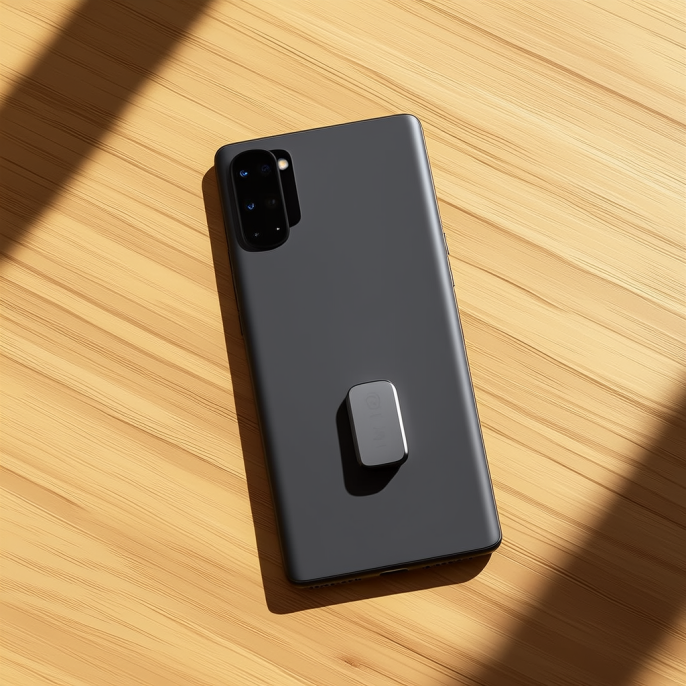
The wrinkle specific to India is that most Android phones sold there have no magnets in the back, so the holding force has to come from the case. Slap a Qi2.2 bank onto an Android in a plain silicone case and it usually slides off, or clings weakly with the coils misaligned — which means slow charging and a warm phone. In other words, in India the case isn't an accessory to the charging setup; it is the charging setup. That leaves very real room for makers of magnetic cases and adhesive rings.
Zoom out and this launch reads like a signal of magnetic wireless charging's geographic spread. Over the past year, Qi2.2-certified products jumped from a few dozen to more than 600, and 25W has essentially become the ceiling for mid- to high-end accessories. Now Xiaomi is bringing the format to a price-sensitive market like India, which says the cost of the modules and coils has dropped enough to support volume sales. Accessories are shifting from 'sold alongside the flagship' to 'their own category, sold by scenario.'
On compatibility, Xiaomi lists these banks as able to stick to the iPhone 17 Pro Max and Xiaomi 17 Ultra, and also charge Samsung and Pixel devices. The cross-brand reach rests on the Qi2.2 WPC-certified standard — the day when one magnetic pad serves a house full of different phone brands is becoming the default. Upstream, the logic of 'one mold, many clients, branded design and customization' is getting smoother, and the scale effects in production and sales are starting to show.
For everyday users, one practical point up front: if your phone has no built-in magnet array, hitting the full 25W depends less on the power bank than on a case with a proper alignment ring. Wireless will never match that 45W wired burst, but in commuting or meeting scenarios where you just slap it on, what it saves you is the cable you can never find. When shopping, look for the Qi2.2 mark — it's a more reliable cue than the peak wattage in the marketing copy.
Xiaomi's move really just puts the trend on the table: magnetic wireless charging is no longer the private accessory of one ecosystem, but is becoming a capability users in emerging markets expect by default. Once 25W magnetic power banks can be mass-produced and stocked in a market like India, the whole chain — from modules and coils to case design and customization, production and sales — gets pulled forward a step. Whether Southeast Asia or Latin America is next is, frankly, worth watching.
This article is originally published by Shanwu. Please credit the source when reposting.
Copyright © 2026 Shanwu. All Rights Reserved.