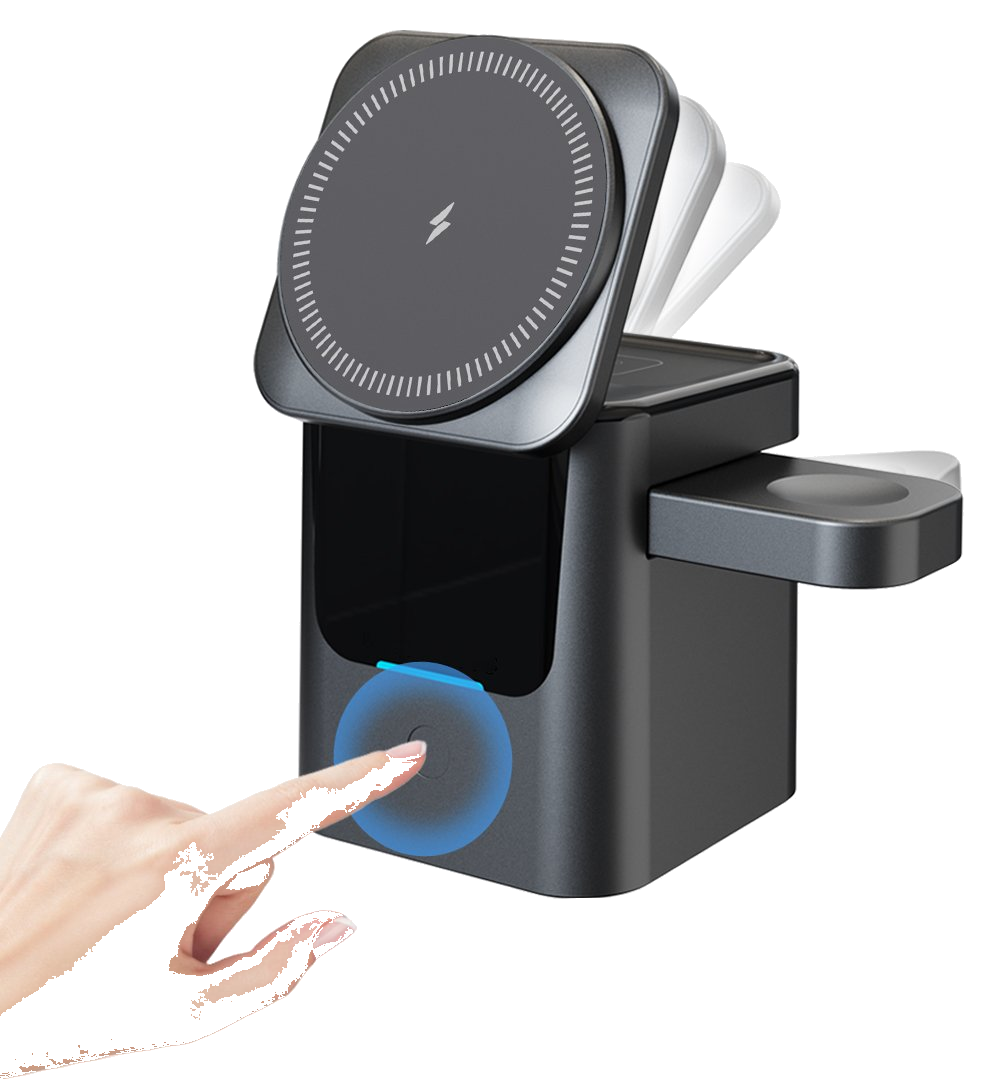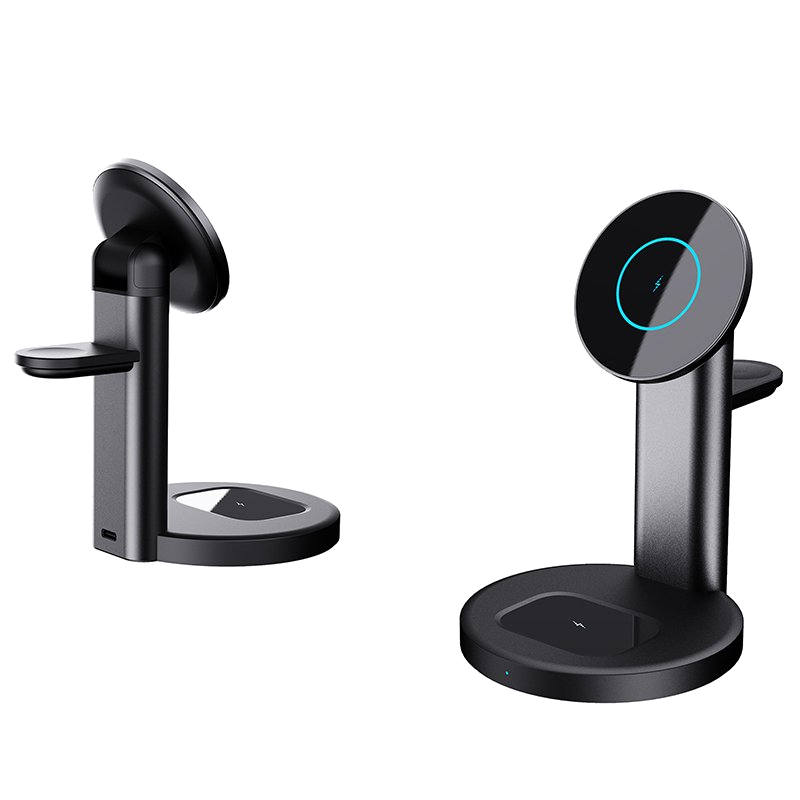
On a business trip last month, I got stuck behind a traveler at airport security for nearly ten minutes. The 3C certification mark on the back of his magnetic wireless power bank had worn down to a ghost of itself, and after checking it back and forth, the officer shook his head. This is not an isolated case. Since the Civil Aviation Administration of China's emergency notice took effect on June 28, 2025, any power bank without a 3C mark, with an illegible mark, or belonging to a recalled model or batch is banned from domestic flights. The reasoning is straightforward: in the first half of that year alone, 15 in-flight fire or smoke incidents involving passenger power banks were reported nationwide, nearly double the year before.
Let me lay out the current rules first, and there are only a handful: power banks must be carried on, never in checked luggage; anything rated at 100Wh or below goes through freely, units between 100Wh and 160Wh need airline approval with a limit of two, and anything above 160Wh is a hard no. You cannot use a power bank to charge devices at any point during the flight, and models with a power switch must stay off. On top of that comes the mid-2025 requirement: a clearly legible 3C mark and a clean record on the recall list. Pass all five, and you are good to board.
The 100Wh figure scares a lot of people, but a quick calculation puts your mind at ease. Rated energy in watt-hours equals the nominal capacity in mAh divided by 1,000, multiplied by the voltage, typically 3.7V. That means 20,000mAh works out to roughly 74Wh and 10,000mAh to about 37Wh, both comfortably inside the limit. Mainstream magnetic wireless power banks mostly sit between 5,000 and 10,000mAh anyway, since nobody wants a brick dragging their phone down. For this category, capacity is almost never the issue. The traps are elsewhere.
Where magnetic models actually get into trouble is the label. These products are built thin and spend all day rubbing against the back of a phone, so the printed 3C logo and watt-hour figure wear off far faster than on a regular power bank. Some people also add a protective sleeve or a magnetic ring sticker that ends up covering the mark. The security standard is legible at a glance; anything peeled, blurred, or blocked counts as non-compliant. The other trap is recalls: specific batches of models such as the Romoss PAC20-272 and Anker A1642 are on the State Administration for Market Regulation's defective product recall list, and even if your unit works perfectly, a matching batch number gets it pulled. Spending 30 seconds before you leave, flipping it over to check the mark and looking up the model on the recall center's website, beats ten minutes of arguing at the checkpoint.
So what happens if yours does get stopped? Here is the uncomfortable truth first: do not count on mailing it home. Major couriers including SF Express, ZTO, and Yunda have all refused to ship power banks because of lithium battery transport risks. At peak times, Chengdu Tianfu International Airport intercepts several thousand non-compliant power banks in a single day, and most travelers end up either surrendering them or handing them to whoever came to see them off. A few airports offer temporary storage: Beijing Capital keeps items free for seven calendar days, at the passenger service centers on level one of the T3 parking garage and level B1 of T2, after which unclaimed items are treated as abandoned. Policies vary widely between airports, so rather than gambling, leave the questionable unit at home.
Two details are easy to overlook. First, international flights play by different rules: a power bank bought through proper channels overseas without a 3C mark can fly on international and regional routes as long as it meets the energy limit. But if your itinerary includes a domestic connecting leg, the transfer checkpoint still enforces the 3C standard, and that is exactly where many travelers get caught. Second, take the power bank out of your bag and screen it separately. If your magnetic unit is snapped onto the back of your phone, detach it beforehand and save yourself a secondary bag check.
Looking ahead, the bar is only going up. The new national standard for power bank safety, GB 47372-2026, published on March 31, 2026, makes cell nail-penetration, whole-unit drop, and crush testing mandatory, with enforcement starting April 1, 2027. For buyers, that means when picking a magnetic wireless power bank this year, look beyond capacity and magnet strength and favor products already tested against the new standard, with the watt-hour rating printed large and clear. For factories doing design and customization work, it is a signal too. Some manufacturers have already switched the 3C mark from easily-worn silk screen printing to laser etching and moved the energy rating to the front in bigger type. Small changes on paper, but exactly the kind of practical work that spares users trouble at the checkpoint.
Here is your 30-second pre-boarding checklist: flip the unit over and confirm the 3C mark and watt-hour figure are intact and legible; check the model and batch against the recall list; look for any swelling or deformation; and verify the capacity converts to under 100Wh at 3.7V. And if you forget your power bank altogether, do not panic. More and more airport terminals, rail stations, and cafes now have wireless chargers built into their seating areas, and this kind of public-space wireless charging is rolling out faster than most people realize. Setting your phone down on the table to top up beats risking a non-compliant power bank every time.
This article is originally published by Shanwu. Please credit the source when reposting.
Copyright © 2026 Shanwu. All Rights Reserved.