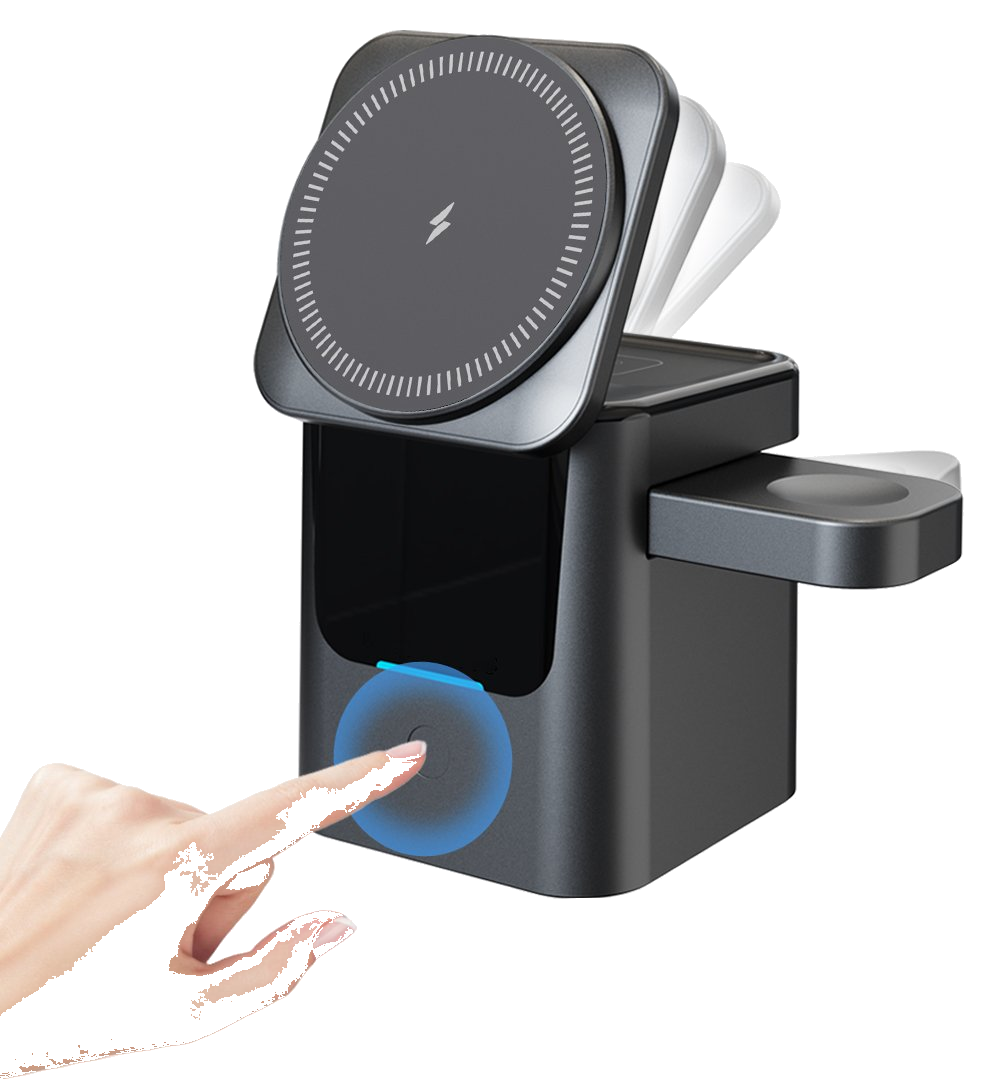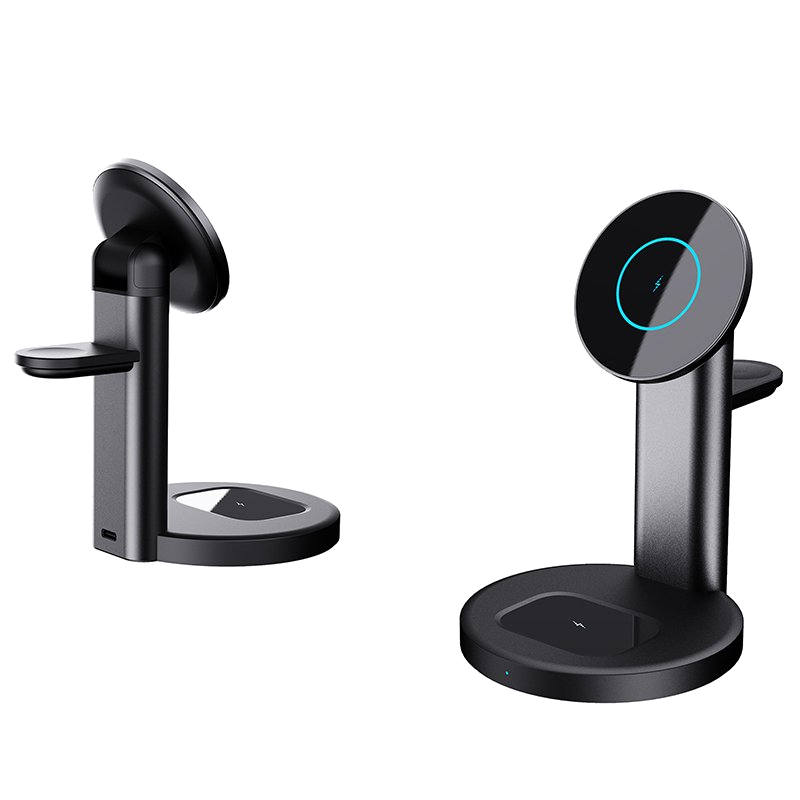
The question I have been asked most in the past six months: does wireless charging wreck your battery? The people asking include someone who just bought a magnetic wireless power bank, someone with a 3-in-1 wireless charger on their office desk, and one friend who was so worried that the wireless charger he bought has been sitting in a drawer ever since. Today, no gut feelings - just data. Several long-term controlled tests have been published recently, and the conclusions are not what most people expect.
First, the physics - one minute is enough. Wireless charging works by electromagnetic induction: electricity becomes a magnetic field and then becomes electricity again, at roughly 70% to 85% efficiency, lower than the 90%-plus of a cable. The lost energy mostly turns into heat. But here is the key point: once current enters the phone, it goes through the same rectifier and battery management system (BMS). The battery cannot tell whether the power came from a cable or a coil. A 'wireless-only battery damage mechanism' simply does not exist in the physics.
Now the most convincing test. A blogger took identical flagship phones, kept them at a constant 25 degrees Celsius, charged strictly within the 20%-80% window, and ran the test for 120 straight days. Original wired charging: 3.0% capacity loss. An original wireless charger with active cooling: 3.7%. A generic pad with no cooling plus a thick phone case: 7.6%. A cheap no-name charging pad: 11.2%. Put the four numbers side by side and the conclusion jumps out - a properly cooled certified wireless charger is practically indistinguishable from wired, and the doubled losses all come from heat soak and the unstable current of junk chargers.
Longer-term data exists too. A three-year comparison found that with daily use, the wired group retained about 85.7% battery health after three years and the wireless group about 82.3% - a 3.4-point gap. With temperature under control, the coil properly aligned, and the system's battery protection enabled, the gap shrinks to within 2%. A separate 12-month track of 2025-2026 flagships found that at the same 15W with normal cooling, the wireless-only group kept 92% capacity versus 94% for wired-only. Two or three extra points a year - frankly, less damage than one afternoon of navigating in direct sunlight while charging.
So who is the real battery killer? One word: heat. When a lithium cell sits above 38 degrees Celsius for long periods, electrolyte decomposition and lithium plating both accelerate, and the capacity loss is irreversible. Journal data puts it more bluntly: at around 45 degrees, every additional 10-degree rise roughly halves cycle life. Used properly, a wireless charger keeps the phone body under 35 degrees, and in that range it is virtually identical to wired charging. In other words, the thing to guard against is not 'wireless' - it is 'hot'.
Check yourself against this list - almost everyone around me has hit at least one. First, dropping the phone on a pad before bed and charging all night: overnight trickle charging keeps the battery around 37 degrees, and doing this long-term costs an extra 5% to 8% of capacity versus wired - this is the habit I personally dropped after reading the data; now I charge to 80% before sleep and take the phone off. Second, charging through a thick case or a card-holder case, which completely blocks heat dissipation. Third, careless placement: if the coil is misaligned by more than 5mm, efficiency can drop about 40%, and every lost watt becomes heat. Fourth, charging in a sun-baked car, under a blanket, or next to a radiator. Fifth, gaming while charging - charger heat stacks on processor heat and the temperature spikes.
Now the buying advice. A Qi-certified wireless charger is the baseline, non-negotiable. For desktop stands, prefer one with an active cooling fan - in the test, that was the group that tied with wired charging. If you worry about alignment, go magnetic: a magnetic wireless charger snaps the coil into position and eliminates misalignment heat at the root. For a magnetic wireless power bank on the go, pick one that clearly specifies its thermal management and power negotiation. For a bedside table or office desk feeding phone, watch and earbuds at once, a 3-in-1 wireless charger or multi-device wireless charging station is genuinely convenient - but cooling design matters even more there, because heat from three devices stacks up.
A quick word on public spaces. Wireless charging spots built into tables at cafes, hotels and airports are multiplying, and most run at 15W or less with short top-up sessions - shallow charging that lithium batteries actually prefer, so there is nothing to worry about as a user. For buyers and project teams, though, the thermal structure and temperature control strategy of embedded charging points must be locked down at the design and customization stage; choosing a supplier with proper manufacturing and sales credentials and real certification reports costs far less than handling overheating complaints later.
One sentence to wrap up: wireless charging does not hurt your battery - heat and junk chargers do. Control the temperature: buy certified, skip the all-night charge, lose the thick case, align the coil, and never charge in a hot car. The remaining one or two percent gap is the tax you pay for the convenience of just setting the phone down. Worth it.
This article is originally published by Shanwu. Please credit the source when reposting.
Copyright © 2026 Shanwu. All Rights Reserved.