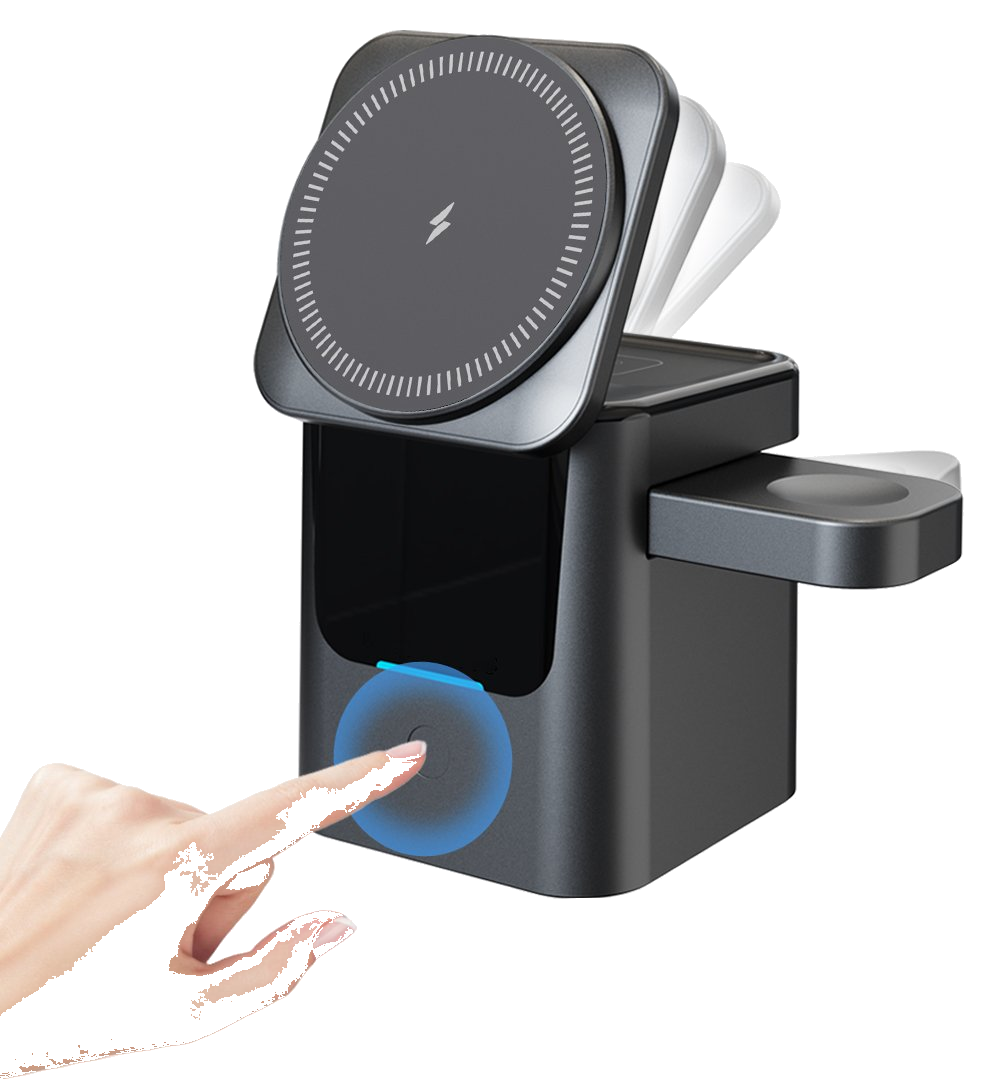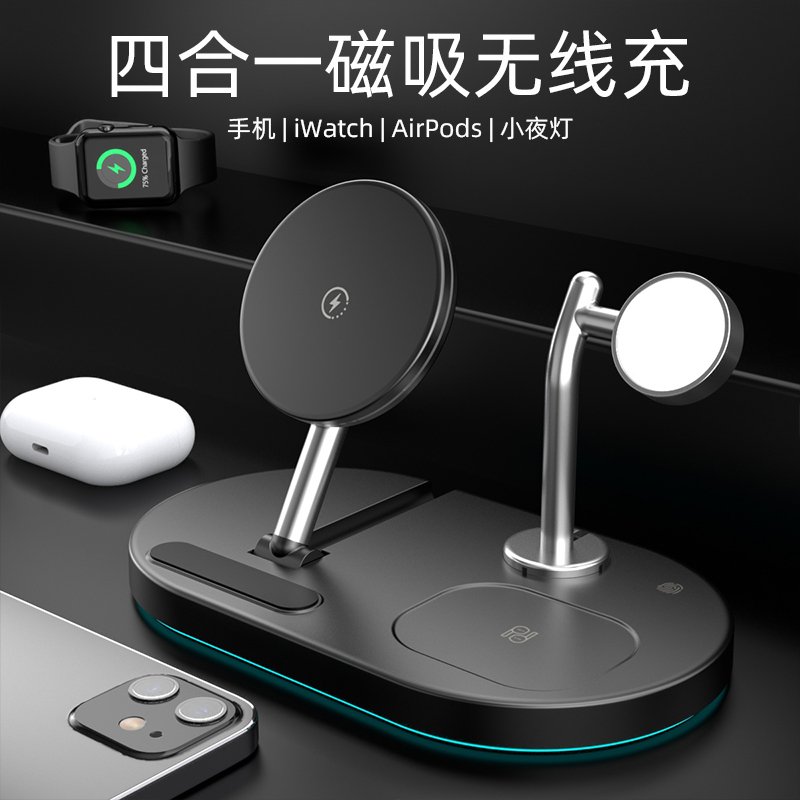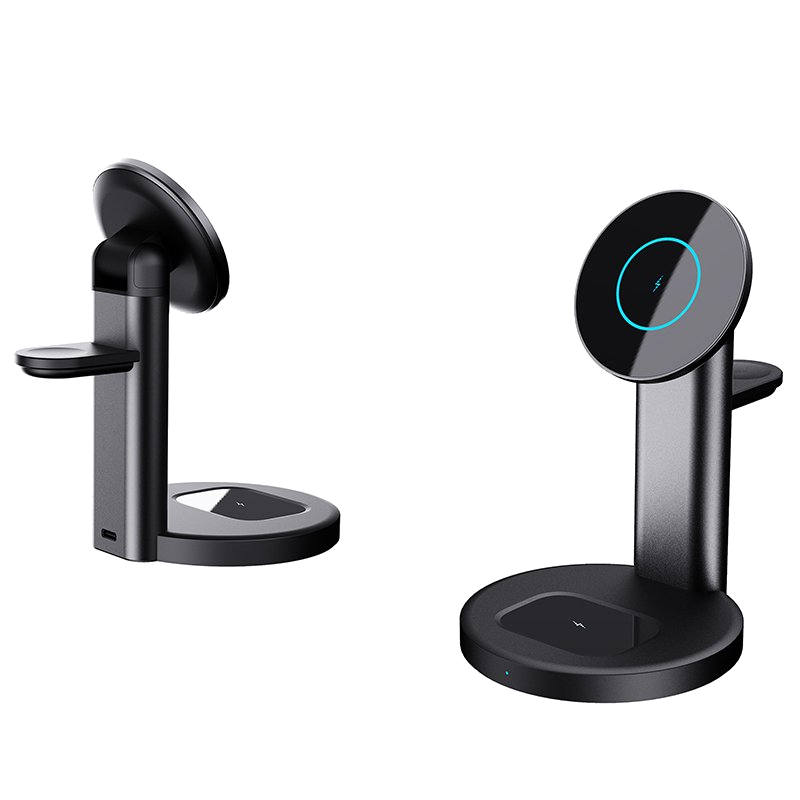
The interesting new selling point on magnetic power banks this year is not wattage, it is cell chemistry. At IFA in Berlin, Belkin put its BoostSolid semi-solid-state cell into the UltraCharge Pro line: the 5,000mAh magnetic model measures 8.8mm thick, roughly 40 percent slimmer than comparable 5K packs, at 104 by 72mm, a little larger than a credit card. On paper it is a Qi2-certified 15W magnetic charger, with the single USB-C port delivering up to 22.5W over Samsung's fast-charging protocol or 20W over USB PD, enough to feed two devices at once, one snapped on the back and one on a cable. There is no screen, just an LED battery indicator, and it sells for 59.99 pounds in the UK in black or sand, with a two-year warranty plus a connected equipment warranty worth up to 1,500 pounds.
Start with the terminology, because it gets stretched easily. A semi-solid-state battery is not a solid-state battery. What it does is add a gel-like electrolyte layer alongside the liquid electrolyte, pushing the liquid content down without taking it to zero. Belkin does not call its own product a solid-state battery either; it says the design reduces the risk of fire and swelling. True all-solid-state cells still show up only in very small capacities, and the handful of Taiwanese brands listing them on their spec sheets remain the exception. So when a box says solid state, the useful question is which kind.
Going semi-solid buys two things at once: heat tolerance and longevity. Liquid cells dislike high temperature and physical pressure. Heat breaks down the electrolyte, generates gas and swells the pouch; a puncture or sustained compression can put ignition uncomfortably close. The gel layer works as extra structural support and thermal buffer, and Belkin's claim is that the cell stays intact even if driven through with a nail. On lifespan, Belkin rates it at holding at least 80 percent of capacity after 1,000 cycles, where ordinary liquid cells typically fade to 80 percent somewhere between 600 and 800 cycles. Getting durability and safety onto the same specification line is the genuinely useful part of this generation.
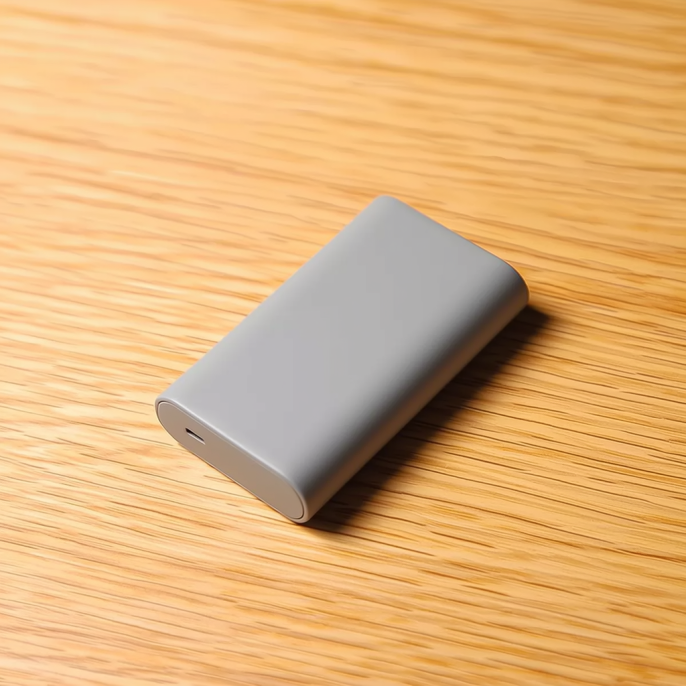
Safety does not rest on the cell alone; circuitry has to watch it. Belkin puts two temperature sensor chips on the semi-solid model to poll cell temperature, and published material mentions both 20-millisecond and 250-millisecond sampling intervals, so the figures are not fully consistent. The direction is the same either way: sample densely enough that the pack cuts power the moment temperature leaves the safe band. Belkin quotes a working window of 0 to 40 degrees Celsius. The housing is metal with a soft-touch finish, the packaging is plastic-free, and Belkin says at least 52 percent of the plastic parts, excluding the cable, come from recycled material. None of that makes a headline, but all of it lands in the same scenario: a pack pressed against a phone for a long stretch.
This matters more for magnetic power banks than for any other form factor because their thermal environment is the worst. Wireless charging runs at a bit over 70 percent efficiency, and the remainder turns into heat between the two coil assemblies. The pack is also strapped to the back of a phone that is generating its own heat, and magnetic attachment demands a thin body, usually 8 to 9mm, which means fitting more energy into less space. Stack those three conditions and the point where a liquid cell is most prone to swelling sits in the thinnest part of the design. The gel layer in a semi-solid cell patches exactly there, which makes it less a marketing angle than a structural necessity.
Price draws the same line clearly. During Amazon's fall sale on October 6 and 7, several actively cooled newcomers hit all-time lows together: Anker's MagGo 2 Pro from 109.99 dollars to 87.99, UGREEN's liquid-cooled MagFlow Pro from a 150-dollar debut to 94.98, Belkin's UltraCharge Pro line starting at 66.49, and Anker's Prime 3-in-1 from 229.99 down to 132.98. Even after the cuts, that tier still holds between 66 and 133 dollars, while ten-dollar charging pucks sit on the same bestseller list. The gap pays for cell chemistry, active cooling, displays and stand mechanisms. Moves at IFA back this up: Anker's mechanical cooling keeps the surface at 36 degrees Celsius during sustained 25W charging, UGREEN's micro-pump liquid loop lowers device temperature by up to 10 degrees Celsius to 38, against an industry baseline of 48.
So what should a buyer check. The word solid on the box carries very little information; four other things are worth confirming. First, whether the cell type is stated as semi-solid or all-solid, since reputable products label it clearly and vague phrasing such as high-density cell deserves a second look. Second, how cycle life is written: a specific retention figure after a stated number of cycles, or just a capacity number. Third, whether there is a CCC mark, which is mandatory for power banks sold in China and can be verified against the certification registry, and products citing GB 31241-2022 and GB 4943.1-2022 usually publish their credentials on the listing page. Fourth, whether thermal protection and magnetic holding force come with numbers; strong magnets alone says nothing.
One last point on the industry side. Semi-solid cells still cost more than liquid ones, so they will land first in premium magnetic power banks while the mid and entry tiers stay on liquid chemistry for now. For anyone doing contract manufacturing or custom work, swapping the material is not a matter of changing one cell: procurement cost, structural thickness, thermal circuitry and certification all have to be recalculated together, and shaving a millimeter usually disrupts internal layout more than expected. The broader backdrop is GB 47372-2026, the safety specification for portable power banks, published in March 2026 and effective from April 1, 2027, which makes real-time battery monitoring, readable abnormal-event logging and a unique traceability code mandatory. Thermal control and traceability are turning from nice-to-have features into the price of admission, and semi-solid cells happen to arrive right on time.
This article is originally published by Shanwu. Please credit the source when reposting.
Copyright © 2026 Shanwu. All Rights Reserved.