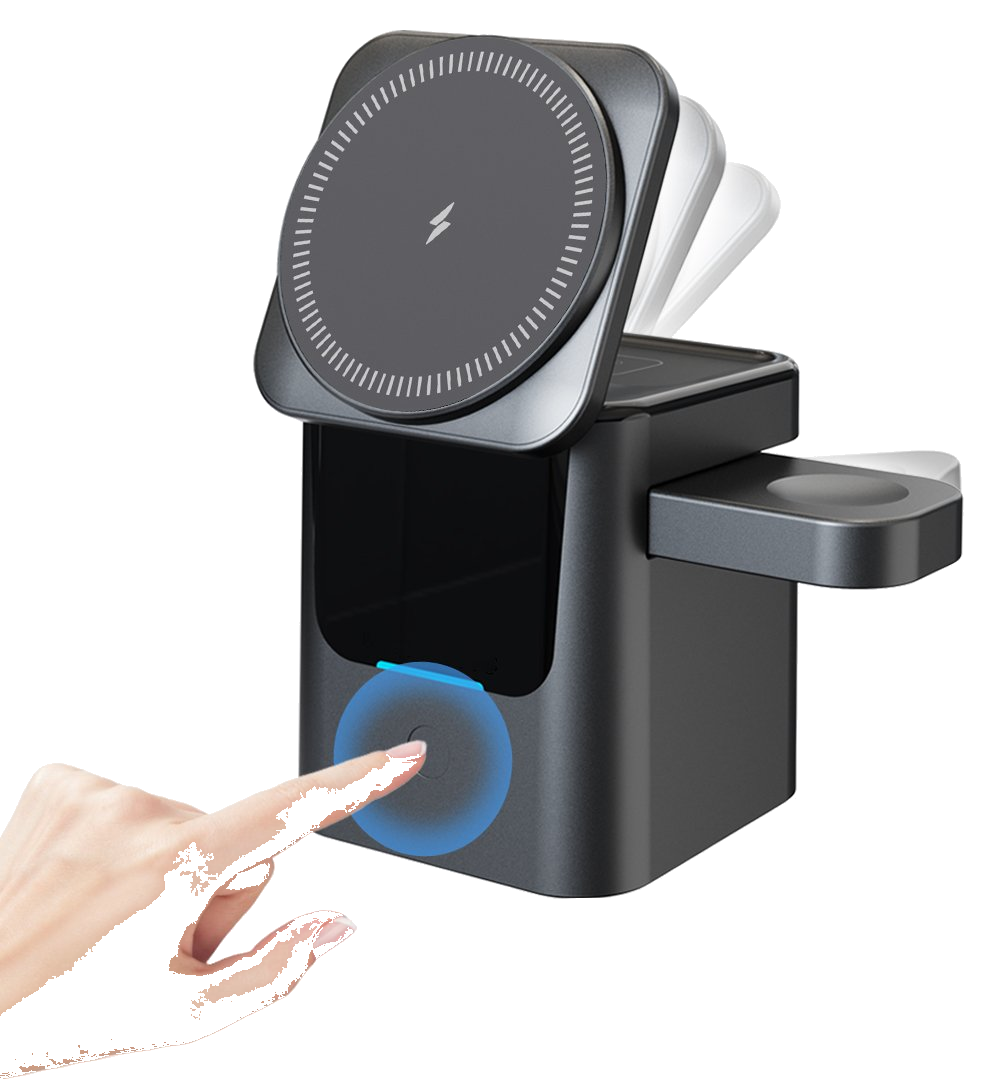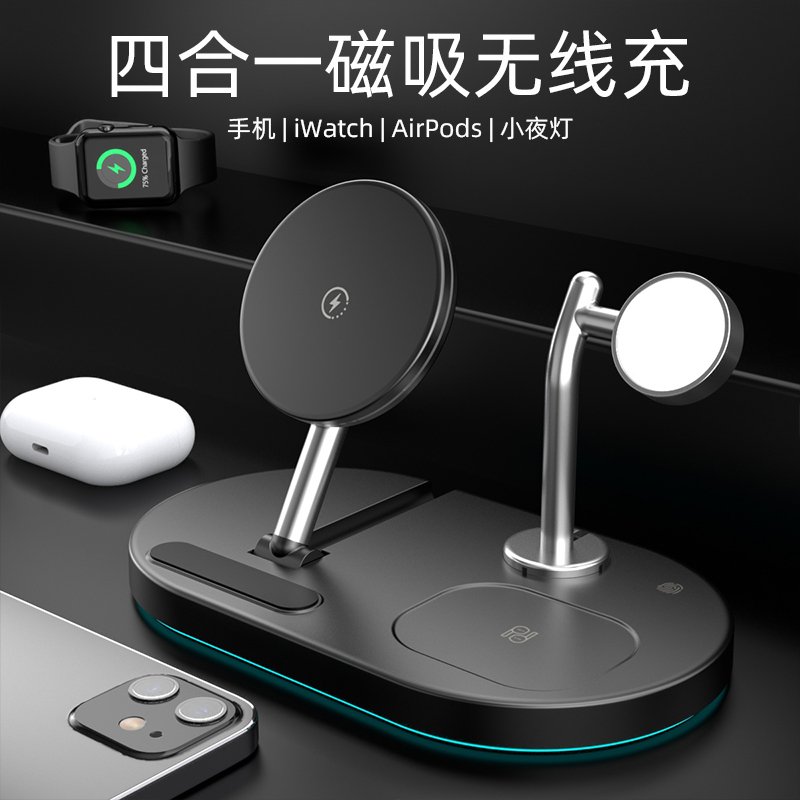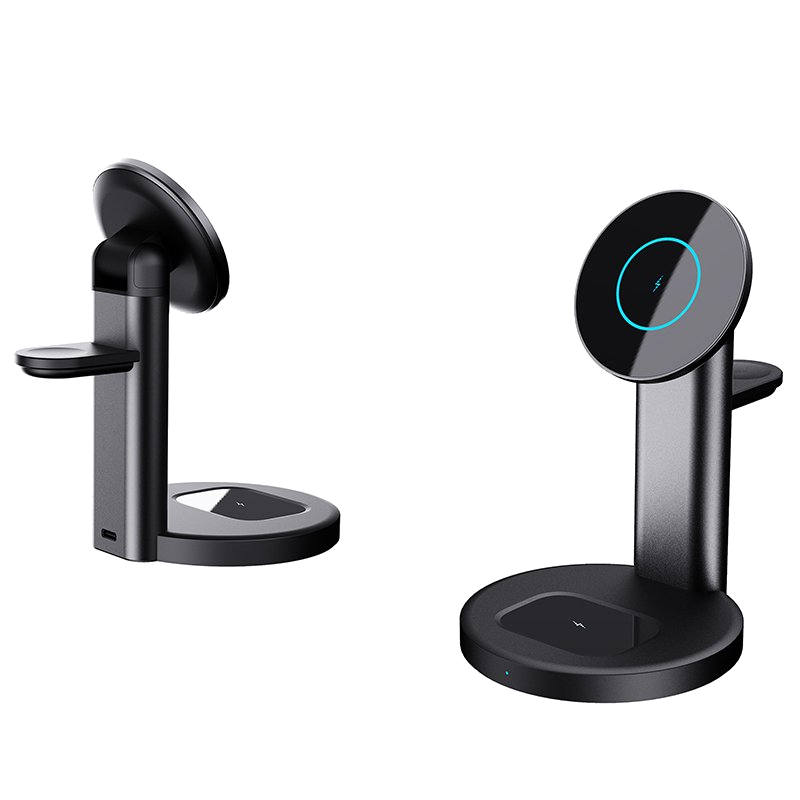
In early October, Apple listed a charger called the Twelve South PowerBug Qi2.2 in some overseas stores at $49.95, and it has not reached the Chinese store yet. It is neither an upright stand nor a flat charging pad, but a wall adapter and a magnetic charging surface built into one object: prongs on the back go straight into an outlet, and the magnetic face on the front starts charging the moment a phone attaches. The whole thing stands about 5.8 centimetres tall and weighs 100 grams, with folding prongs that keep it small in a bag.
What it actually replaces is three other objects: a wall adapter, a magnetic stand, and the cable between them. The outlet already occupies a spot on the wall, and now that spot is itself the charging point, so the desk no longer has to give up any space. That is why its most practical uses cluster where counter space is scarce: a kitchen outlet, the wall beside a bed, the side of a dressing table. To follow a recipe while cooking or a tutorial while getting ready, the phone simply attaches to the wall instead of trailing a cable across the counter.
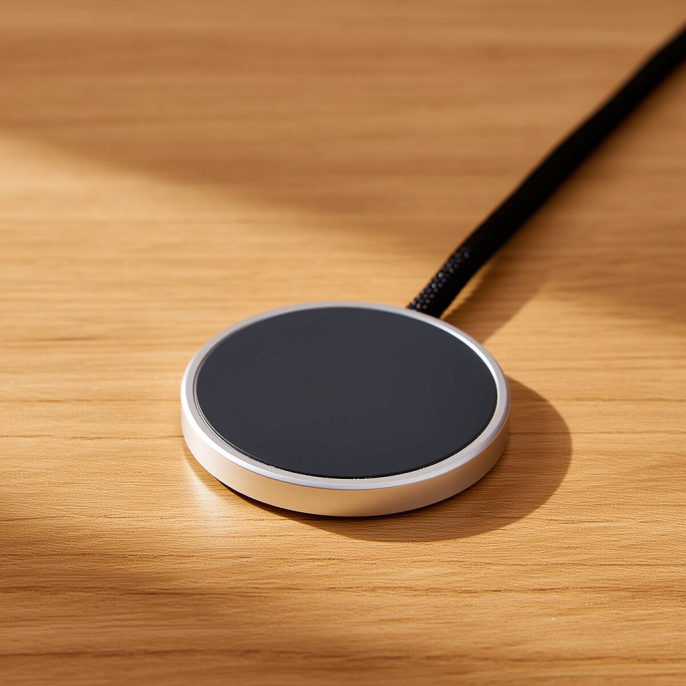
Paired with iOS StandBy, a phone docked sideways turns its screen into a persistent clock, calendar or photo panel, which is the use case this product leans on most in its marketing. One detail matters: how StandBy behaves depends on the model. Pro phones with an always-on display keep the screen lit, while other models wake on a tap or a notification. If the point of buying it is reading the time from across the room, that really only works on a Pro.
The spec confusion is more interesting than the product itself. Chinese tech outlets describe it two ways in the same article: one paragraph says it supports fast charging at up to 25W over Qi2.2 and MagSafe, another says wireless tops out at 15W. According to independent reviews and the official spec listing, wireless output is 15W, the current Qi2 ceiling and the same as Apple's own MagSafe. The USB-C port underneath reaches 35W with PD 3.0 and PPS support. When both channels run together, wireless holds 15W while the wired side drops to 20W, for 35W total. It does not support Qi2.2 at all. The Qi2.2 in the product name reads more like a shelf label than a power promise.
Moving onto the wall also swaps one set of limits for another. Placement decides almost everything: if the outlet sits low, hides behind furniture or ends up near the floor, the device degrades into a fairly expensive plug, with a phone hovering at a height nobody can see or use. Magnetic alignment requires an iPhone 12 or newer, or a Qi2-certified device with built-in magnets; older Qi-only phones will charge but will not hold and can slide off. It does not charge a watch, and no cable comes in the box. Its addressable audience is narrower than its looks suggest.
The same spot on the wall invites a second approach. Anker's new Nano 45W Smart Display Charger costs $39.99, its prongs rotate a full 180 degrees and the US version folds away completely. A small display shows live output and temperature and can identify which iPhone is plugged in by model name, with firmware updates promised for future handsets. Double-tapping a side button switches on Care Mode, which slows charging a little to keep the phone roughly 9 degrees Fahrenheit cooler than it would otherwise run, and the charge cycles between fast, steady and trickle stages on its own. Its weak point is a single USB-C port, and low-power gear such as a watch can be misread and drop to around 2W.
Seen together, these two products show the outlet being reconsidered. It used to be nothing more than a power source; now device recognition, status readouts, overnight protection and cooling strategy are being packed into it, and the form factor of a wireless charger is stretching from a desk object into a wall fixture. For anyone building wireless chargers, three things have to hold at the same time. Mechanically, the prongs, the hinge and the back plate must carry the load, because hanging a phone on a wall puts real stress on the outlet's contact springs. On safety, putting the AC side and the wireless charging circuit in one enclosure forces a fresh look at heat rise and mechanical load. On certification, the Qi2 or Qi2.2 numbers have to survive scrutiny. Hotel bedside outlets, apartment kitchens and wall retrofits in rental housing are all openings where this shape can be discussed as a custom job.
There is no rush to switch. If the outlets at home sit in awkward places, desktop magnetic stands and magnetic power banks remain the workhorses: their power ceiling is higher, reaching 25W under Qi2.2, and they travel with you. The reason to keep an eye on the plug-in category is not raw output. It is that this shape pushes the charger out of the accessories aisle and into the overlap between interior work and electrical planning, where the deciding questions are not wattage but whether the spot has power, whether it is enough, and whether it is installed in the right place.
This article is originally published by Shanwu. Please credit the source when reposting.
Copyright © 2026 Shanwu. All Rights Reserved.