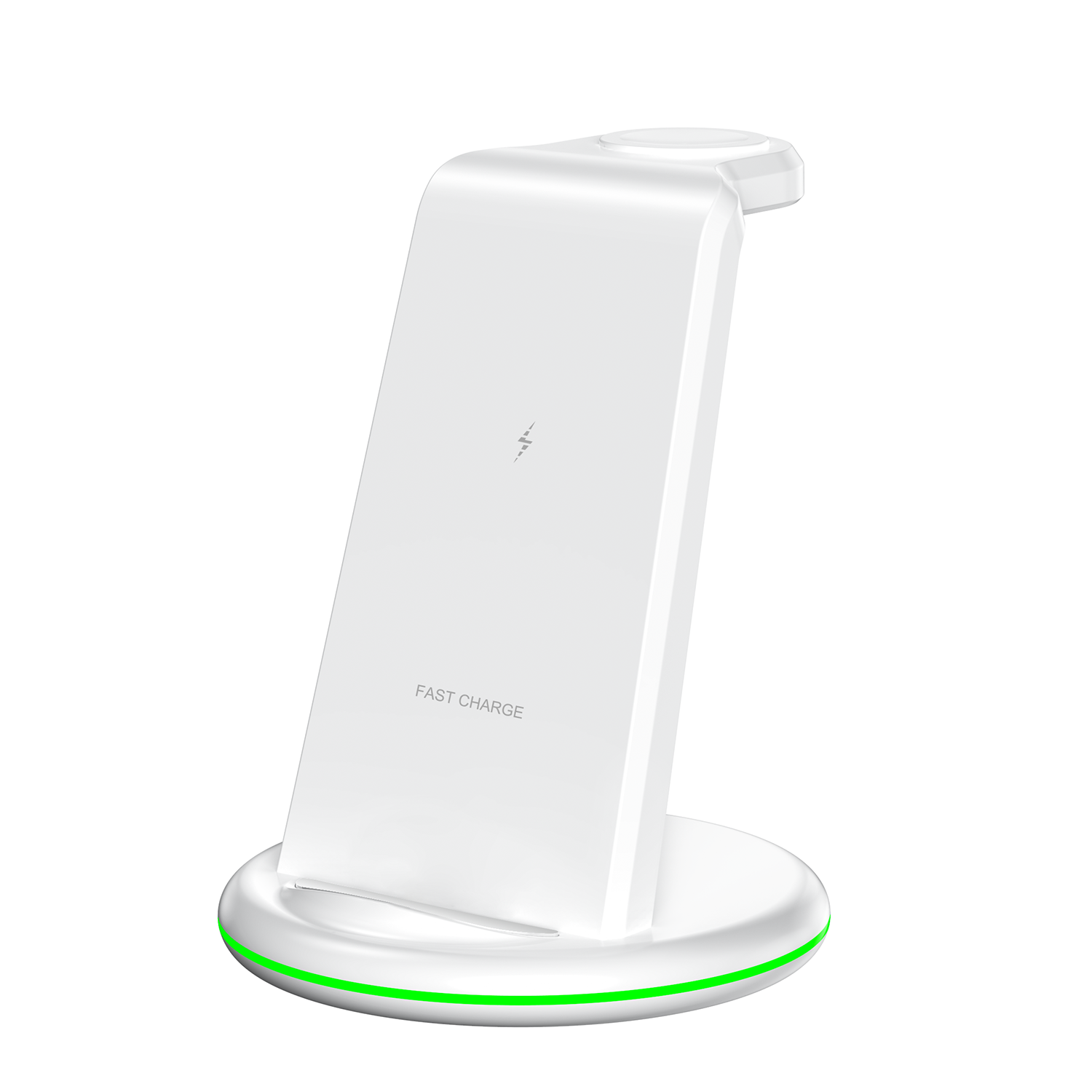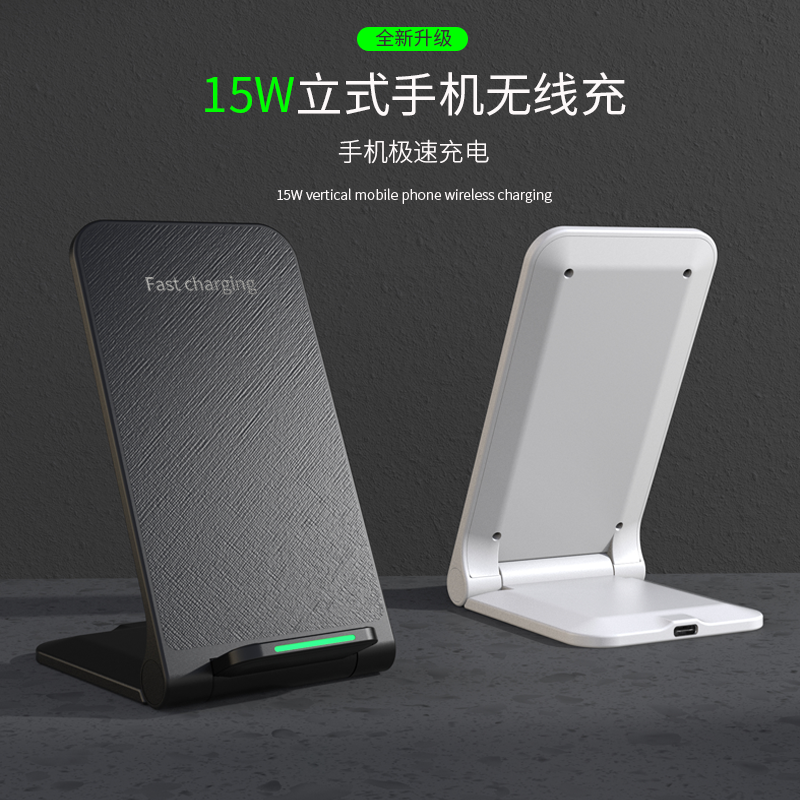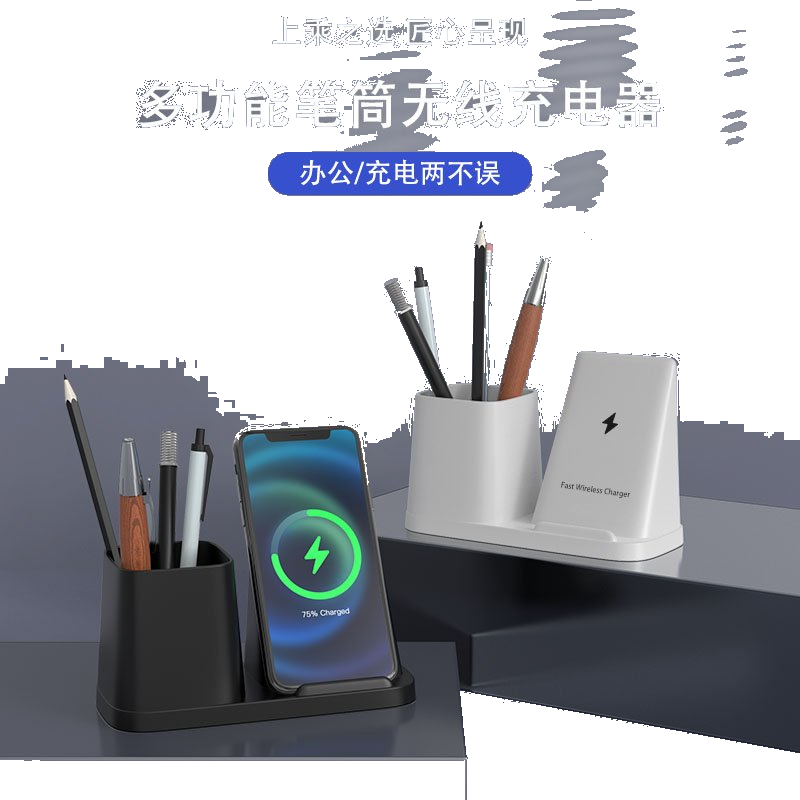
I went through three desk wireless chargers before settling on one. My first was a cheap 10W flat puck—drop the phone and walk away—except it kept stalling at 50% because I never lined up the coil, so the pad kept reconnecting and throttled on heat. Switching to a magnetic vertical stand changed that: the phone snaps into place and I never think about alignment again. The lesson stuck: the form factor you pick is tied directly to how you actually use it, not just how it looks.
Here is the short version: if you use the phone while it charges during the day—reading messages, joining calls, glancing at alerts—a vertical magnetic stand is the only comfortable option; if you just drop it and walk away, a flat puck is simpler. The first dividing line between the two is whether you need to see the screen while charging.
The viewing-angle gap is bigger than people expect. In 2026 roundups, a generic Qi pad takes an iPhone 15 Pro from 20% to 80% in about 105 minutes and leaves the back warm; on a 15W magnetic stand the same phone does it in roughly 68 minutes and stays only slightly warm. Magnetic alignment holds peak power and avoids reconnect heat, so it is both faster and cooler—a result that shows up across multiple 2026 tests.
The hidden value of a stand is landscape use. Since iOS 17, StandBy mode turns a horizontally docked iPhone into a clock, photo frame, or smart display; on Android, Pixel Stand and Google Screensaver do the same. A stand turns charging into a desk info spot—something a flat puck cannot do. Stand-style chargers outsold pads in 2026 largely because these OS features pulled people that way.
Alignment is a different experience on the two forms. With a puck you must center the phone over the coil; a few millimeters off and efficiency drops, far off and it stops. Magnetic stands use a ring of neodymium magnets to pull coil and phone onto one axis, so you snap it down blind and it is right. ESR's magnetic pucks are rated around 1,200 g of hold—the phone stays put even when hanging. The trade-off: magnetic chargers mainly serve iPhone 12-and-newer or Android phones in magnetic cases; non-magnetic phones are better off with a universal puck.
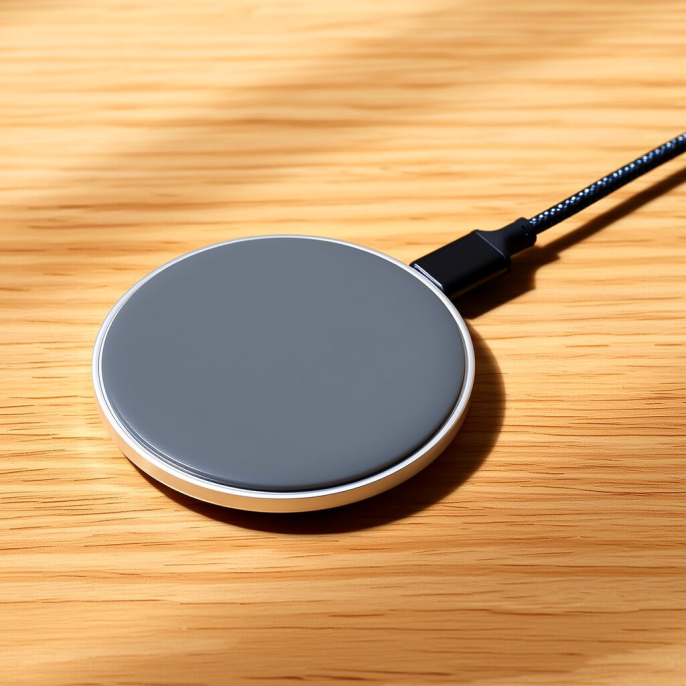
Cable routing is the most overlooked part of a desk setup. A puck routes its cable out the side; a stand routes it from the base or back, so you can tuck it into a desk-edge channel or under a desk mat and keep the front clean. A puck lying flat often leaves the cable poking out where your hand goes. For a tidier result, plug the charger into a smart power strip you switch off at day's end—that also kills the 0.5–2W standby draw and guards against overload.
Both forms hate heat, but a vertical stand has a built-in edge: the phone stands up, so its back meets more air and heat rises instead of trapping against the desk. Active-cooled upgrades—ESR's CryoBoost fan in its 3-in-1, for example—keep the charging surface about 3.6–6°C cooler than a standard pad, holding peak power longer and protecting the battery. The fan has a faint hum in a very quiet bedroom, which is why most cooled models add a quiet mode. If you hate any noise, pick a passive aluminum or graphite-sheet model and rely on placement and ventilation.
On price and warranty: in 2026 a solid single-device Qi2 magnetic stand runs about $30–60, while a 3-in-1 workstation (phone, watch, earbuds at once) sits around $70–100; a flat puck is cheapest, with 10W universal models at $20–30, though they often ship without a power adapter, have weaker magnets, and run warmer under load. Warranties matter too—Anker backs its magnetic stand for 24 months, the Anker 315 puck for 18, and ESR's 3-in-1 for 12. Bottom line: go vertical-magnetic if you use the phone by day, grab a puck for drop-and-go top-ups, and don't pay for a form factor you won't use.
This article is originally published by Shanwu. Please credit the source when reposting.
Copyright © 2026 Shanwu. All Rights Reserved.