
Apple pushed wired charging on the iPhone 18 Pro and Pro Max to roughly 50% in 15 minutes, and the number itself is not the surprise — the protocol underneath is. Hitting that speed calls for a 60W-class USB-C adapter that supports AVS (Adjustable Voltage Supply) plus a cable rated for 60W. The box ships with just a 1-meter USB-C cable and no wall adapter, so actually seeing that 15-minute claim means assembling a charger that speaks the right language yourself.
AVS sounds abstract, but what it does is plain: it lets the charger sweep voltage continuously from 9V to 20V in 100-millivolt steps instead of jumping between a few fixed presets. The upside is that voltage tracks what the phone needs right now, so there is less wasted heat and the fast segment lasts longer. It was finalized with USB PD 3.2 in 2024 and needs a dedicated digital control chip and firmware inside the charger — it cannot be added by a software update, so a brick either ships with it or it doesn't.
That punctures a common assumption: a higher wattage number does not mean faster. ChargerLAB puts it plainly — a large share of today's 65W and 100W GaN bricks run PD 3.0 with PPS and simply do not support AVS, so a 65W brick you bought before 2025, no matter how many watts it claims, will almost certainly miss Apple's 15-minute mark. A 60W brick with AVS serves your phone better than a 100W brick without it.
The neatest twist sits with Apple itself. Its 40W Dynamic Power Adapter with 60W Max (model A3351, about ¥299 in China) leads with 40W in the name yet is the exact brick Apple used in its official test, because it supports AVS and can dynamically push to 60W when the phone asks. So anyone who already owns that brick has no reason to swap it just because some other box prints a bigger number. Third parties that want to match it have to read the fine print: USB PD 3.1 or later, AVS inside, and a single port that actually delivers 60W.
The market is already moving. UGREEN put a 70W GaN AVS variant on sale in China at ¥99–119, Zens lists AVS on its 70W and 100W adapters, and Google's 67W dual-port is in the same camp. In other words, with the iPhone 18 generation AVS compatibility has gone from an Apple quirk to a selling point for third-party bricks, and the first brands to bake that certification into their product definition can tell a shopper in one line that their brick hits full speed on the new phone.
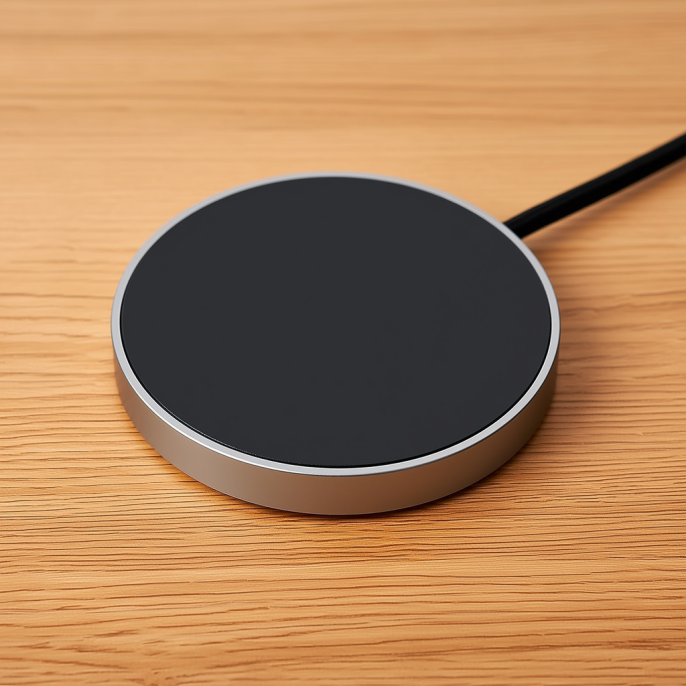
The wireless side did not move: it is still a 25W Qi2 MagSafe ceiling, reaching about 50% in 30 minutes with a 35W-or-higher brick. So the iPhone 18 hands users two coexisting rhythms — grab the AVS 60W cable when you are rushing out, drop it on a 25W magnetic pad at the desk. Apple shipping no adapter by default effectively assumes your home holds both a wired AVS-capable brick and a 25W magnetic puck, turning the desktop from one big brick into a two-piece set of wireless base plus AVS head.
For accessory makers this really splits the bar into two tracks. The wired end has to clear AVS, the wireless end has to clear the Qi2.2 25W certification, and each carries its own validation checklist — you cannot assume one brick or one puck covers both. Zeera's teardown is a useful caveat: on the Pro Max the peak input was only around 53W, spending most of the first 20 minutes at 30–40W and dropping below 30W soon after the halfway point, so 60W is a short-burst peak reference rather than a steady cruise, and writing the peak as the everyday norm in marketing is what trips brands up.
For ordinary users the takeaway is simpler: do not let the wattage number dictate your purchase. The Apple 40W dynamic brick you may already own is enough, and only if you lack one should you add a 60W AVS brick on demand; the 60W-class cable in the box does the job, and chasing a thick 240W cable buys nothing. Keep picking magnetic pads certified for Qi2 25W. Each piece owns its scenario, and only when both are in place does the iPhone 18 charging experience feel complete — and that fast-wired, drop-on-wireless pairing is exactly the story accessory brands will keep telling through the next year.
This article is originally published by Shanwu. Please credit the source when reposting.
Copyright © 2026 Shanwu. All Rights Reserved.