
Many of us have been there: you drop the phone on the charging pad before bed, then wake up to find the battery barely moved. The first thought is usually that the charger is broken, but most of the time the device is fine—the position is wrong. Wireless charging relies on magnetic coupling between the transmitter coil and the phone's receiver coil, and energy transfers efficiently only in a small zone directly above the transmitter. Insiders call that zone the 'sweet spot'; park the phone outside it and charging slows or stops.
A single-coil pad has just one transmitter coil, and its magnetic field behaves like a flashlight beam: brightest at the center, fading toward the edges. Industry figures put it plainly: shift the phone's center more than about 5 mm off the coil center and efficiency can drop by over 30%; push it further and charging simply stops. That is exactly why a casual toss on the nightstand leaves you at 30% in the morning—you thought it was placed right, but it was only grazing the edge of the sweet spot.
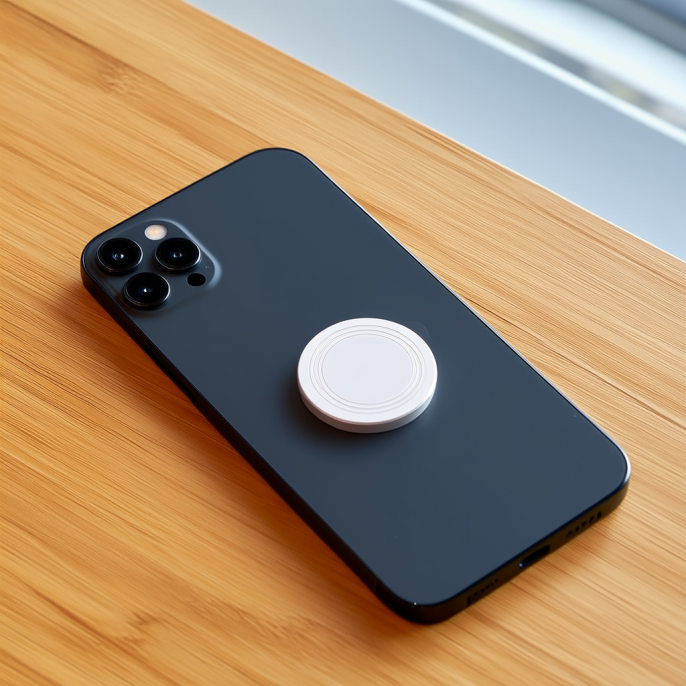
Triple-coil pads were built to break that precision trap. They lay out three separate transmitter coils in a triangle or array, and the control chip detects where the phone sits, then activates only the one or two coils nearest it while the rest stand by to save power. The payoff is an active charging area covering roughly 70% to 85% of the pad, an offset tolerance stretched from 5 mm to about 20 mm at 90% power, and an effective charging gap widened from 4–6 mm to 10–15 mm—so a thick case is far less likely to block the energy.
The third class is the tracking coil, also called a moving coil: a few high-end or concept pads use a small motor to slide the coil under the surface and chase the phone into perfect alignment, promising full speed no matter where you drop it. But the mechanism is complex, and both heat and control are hard engineering problems. The most famous failure is Apple's AirPower, unveiled in 2017 with a multi-coil array for free positioning; it was cancelled in March 2019 because heat management and coil coordination could not meet the bar—even Apple stumbled on the road to a larger sweet spot.
There is a smarter path to free positioning: researchers are using 'metasurface' tricks to reshape a single coil's field into a large, even zone through a passive layer, instead of stacking more coils. One study put hard numbers on it: a single coil's usable area (above 40% efficiency) is only about 5 cm by 5 cm, but with a metasurface the high-efficiency zone (above 70%) expands to roughly 10 cm by 10 cm—four times the area, with peak efficiency also multiplied several times. It is still in the lab and far from mass production, but the direction is clear: move the complexity from 'more coils and chips' to 'designing the field'.
When it comes to buying, first think about how you actually place the phone. If it always sits in one fixed spot on the nightstand and you line it up each time, a single-coil pad is cheap, slim and reliable enough—the best value. If you toss it on the desk and keep checking messages while it charges, a triple-coil 'drop and charge' pad saves real fuss, and the extra few tens of yuan buy you freedom from aiming every time. Tracking coils are for gadget enthusiasts; most people should not pay extra for them.
A few details matter when choosing. Look for Qi or Qi2 certification, and note that Qi2's MPP magnetic alignment already loosens the positioning requirement. For triple-coil pads, check whether they truly detect position and switch on only the nearest coil rather than running all three at once—the latter wastes power and runs hotter. Thick-case users should favor triple-coil pads with a longer charging gap. The same logic applies to home and public deployments: free positioning directly cuts the 'it didn't charge' complaints from users.
At the end of the day, how convenient wireless charging feels is largely decided by the size of that sweet spot. Single-coil pads nail low cost and slimness; triple-coil pads deliver the freedom of casual placement; tracking coils and metasurfaces are the future upside. When picking a wireless charger, figuring out your own placement habit usually matters more than staring at the nominal wattage printed on the box.
This article is originally published by Shanwu. Please credit the source when reposting.
Copyright © 2026 Shanwu. All Rights Reserved.