
When Samsung unveiled the Galaxy S26 series on February 25, 2026, it confirmed Qi2.2 support with 25W magnetic wireless charging. One detail is easy to miss: there are no magnets built into the S26 body. The phone uses Qi2.2's Base Power Profile rather than the Magnetic Power Profile that handles alignment. Samsung's reasoning is that built-in magnets would interfere with the S Pen's electromagnetic resonance system. In practice, the S26 can reach 25W wireless fast charging, but locking into place, aligning the coils, and holding peak speed still depends on a magnetic case.
The clearest proof comes from Samsung itself. The company's own 25W magnetic wireless charger, model EP-P2900, just 4.4 mm thin and Qi2.2 certified, carries a repeated note on its product page: it requires a magnetic case. Both the Taiwan and Italy official spec pages state it plainly. To get 15W to 25W fast wireless charging on the Galaxy S26, S26+, or S26 Ultra, you need an official or third-party Qi2 Ready magnetic case. In other words, even Samsung's own charging puck assumes you have already snapped a magnet-equipped case onto the phone.
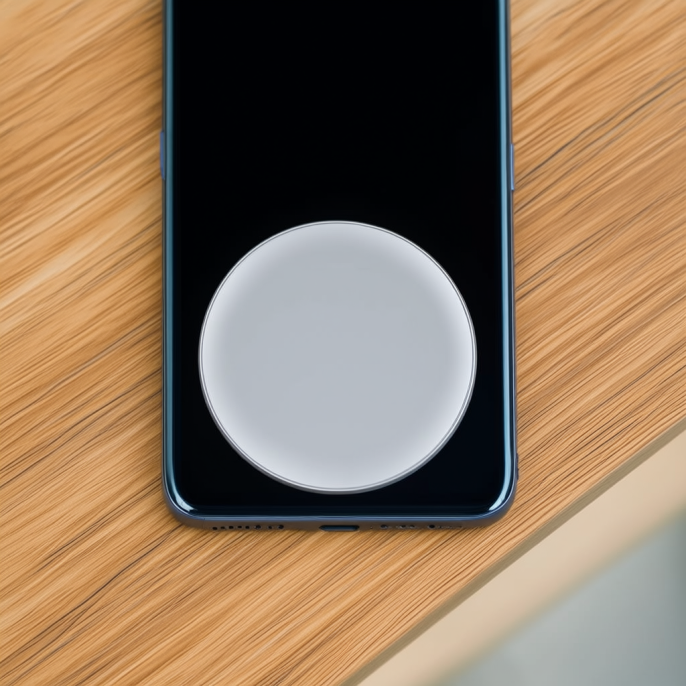
Why does the magnet matter so much at 25W? Wireless charging relies on electromagnetic induction, and the farther apart or more misaligned the coils are, the more energy is lost as heat. At 15W you could get away with a rough placement and a few millimeters of slack. At 25W the tolerances tighten sharply. One accessory maker's tests showed a generic magnetic case letting the S26 start at 14W and fall to 9W within five minutes, taking nearly an hour to reach half charge, while a case kept under 2 mm thick with magnets aligned to within about 0.2 mm held a steady 20 to 25W. Those extra two millimeters are often the gap between a claimed 25W and a real 12W.
As a result, the magnetic case has moved from an optional accessory to a required link in the chain. What is interesting is that it is growing into its own certified hardware category. Third-party makers like MagBak, Thinborne, and OdinCase now pitch Qi2 and MPP certified magnetic cases: N52 neodymium magnets, magnet placement built strictly to the Qi2 spec, and ultra-thin backs that preserve charging efficiency. For case factories and brands, this adds a high-margin, customizable, OEM and ODM ready SKU to the three-piece set of phone, magnetic case, and charging pad. The opportunity in design, customization, manufacturing, and sales is quietly settling onto that thin shell.
For Android users, getting on Qi2.2 now means assembling a three-piece set: a 25W-capable phone, a certified magnetic case, and a Qi2.2 charging pad. Retailers and accessory brands have started bundling them together. In markets where Samsung leads, especially across Asia-Pacific, this case-dependent chain directly shapes the real charging experience: the wrong case drops 25W to 7.5W in seconds. So when shopping for a magnetic wireless charger, don't just look at the pad; first check whether your phone needs a case to align magnetically.
Looking ahead, the split between built-in rings and case-added magnets will define two camps. Apple bakes the magnet array into the back glass, Google's Pixel 10 uses its native Pixelsnap alignment, while Samsung flagships leave the magnets to the case. For buyers the takeaway is practical: know which path your phone takes before you buy. For accessory makers and OEM or ODM factories, the certified magnetic case, this invisible necessity, may be the most underrated slice of growth in the magnetic wireless charging market over the next two years.
This article is originally published by Shanwu. Please credit the source when reposting.
Copyright © 2026 Shanwu. All Rights Reserved.