
On September 30, the third-generation CR400AF-X smart high-speed train entered passenger service for the first time. The debut run was train G43 from Beijing South to Hangzhou East, with busy Beijing-Shanghai and Beijing-Hangzhou services such as G42 and G35 following soon after; for now the experience is limited to business class on Fuxing trainsets. The trainset was led by China Railway and built by CRRC Qingdao Sifang, and the wireless charging pad beside each seat uses UFCS, the merged fast-charging specification China has been advancing on its own.
Wei Ran, chief engineer at the China Academy of Information and Communications Technology, offered a plain comparison: wireless charging installations in public settings such as high-speed rail have mostly followed the Wireless Power Consortium's Qi specification, which caps power below 15W, and the usual complaints in practice are slow top-ups and fast heat build-up. With UFCS, that starts to change. Once phones supporting UFCS wireless charging reach the market one after another, in-train charging power can climb to close to 30W, which is enough to take a phone from 10% to roughly 60% in half an hour.
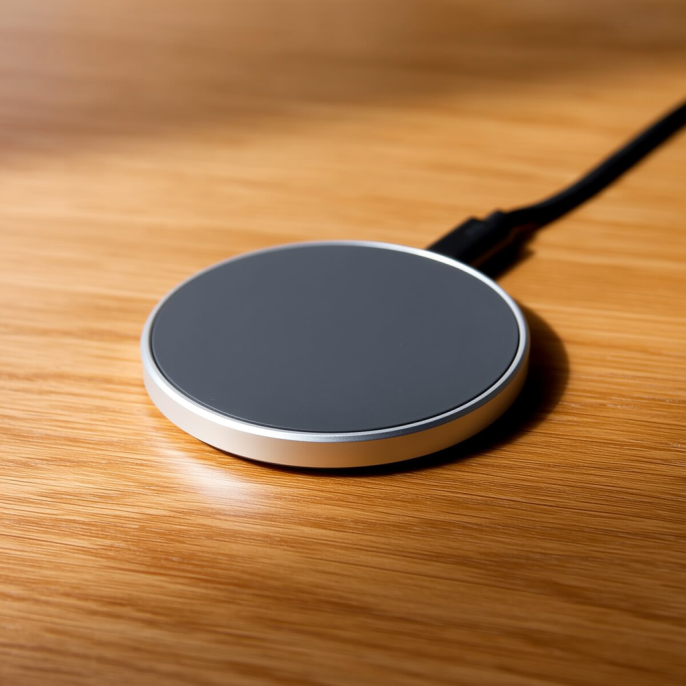
UFCS was drafted under the lead of CAICT together with Huawei, OPPO, vivo, Honor and others, with a deliberately plain goal: let devices and chargers from different brands talk to each other and charge each other. That matters because wireless charging in China has been squeezed from two sides. Proprietary protocols deliver high power but recognize only their own hardware, while the general standard used in public installations sits at very low power, so everything charges slowly no matter what you put down.
The regulatory track is moving as well. In December 2025, the technical specification for merged fast charging on mobile terminals entered the national standard drafting process. On scale, as of September 30, 2026, 319 products nationwide had passed UFCS merged fast-charging certification, spanning 49 companies: 104 phones, 17 tablets, 2 laptops and 1 wireless data terminal, plus 102 chargers, 12 power banks, 6 socket products and 75 chip products. Chargers and chips already outnumber phones on that list, which suggests the supply chain got ready earlier than the devices did.
Public settings are precisely where protocol unification matters most. A charging spot in an airport, station, restaurant or hotel will not ask what phone you carry; one surface has to serve Apple, Huawei, Xiaomi and Honor users at the same time, and mismatched protocols turn the handshake into a lottery, with power dropping to 5W or less more often than people realize. Wei Ran puts the core value of the standard in one word, merge: it turns public wireless charging from a gamble into something you can rely on. For anyone doing the engineering, that translates into something concrete, since the number of protocols a single pad must support collapses from several to one, and tooling, coils and firmware all need fewer revisions.
A gap remains, though. The train is already in service, while phones supporting UFCS wireless charging will not arrive in numbers until the end of this year. In practice, most of the pads in business class are still running under the old rules, and hitting close to 30W requires both ends to be ready. That sequence, with infrastructure moving first and devices catching up, is common enough in charging, much as the USB-C rollout into public facilities followed a similar path.
Looking ahead, the extension path is already fairly clear. Starting from train carriages, subway cars, restaurants, massage chairs and public benches all present openings. For wireless charger makers, the change lands in three places. A single pad has to cover a wider range of models, so protocol firmware shifts from tuning for one or two brands to covering a broad field. Certification has to be realigned with the national standard. And in public-sector procurement, the certification numbers and compatibility lists in a bid will carry more weight than the industrial design. The leverage in design and customization is moving from how good a shape you can produce toward which certifications you hold and how many models you can support.
One note on the trainset itself. Development of the CR400AF-X began in 2025, the first prototype finished assembly and rolled out of CRRC Qingdao Sifang for factory testing in early August 2026, and six trainsets entered service initially, with more to follow as railway authorities expand the routes. What deserves attention is not one faster charging pad on one train, but whether this homegrown specification can leave the carriage and land on surfaces in public places more broadly.
This article is originally published by Shanwu. Please credit the source when reposting.
Copyright © 2026 Shanwu. All Rights Reserved.