
The iPhone 18 went on sale on September 18 and pushed the headline number for magnetic wireless charging up to 25W Qi2.2. Yet the more interesting shift is not the wattage itself, but the fact that magnetic alignment is quietly turning from an Apple-only feature into a shared language the whole industry can speak.
On this generation's Pro and Pro Max, Apple built the MagSafe magnet ring straight into the back glass, so any Qi2.2 magnetic pad snaps on and delivers the full 25W with no case required. The first foldable, the Ultra Foldable, is the odd one: its outer-back ring hits 25W when closed, but once unfolded the inner screen faces up and the surface is no longer coil-friendly, so it drops to 5W BPP. In practice you charge it closed.
Android is moving the same way this year. Google's Pixel 10 family is among the first Android phones to build Qi2 magnets into the body itself, branded Pixelsnap. The Pixel 10 Pro XL reaches 25W Qi2.2 while the other models sit at 15W, and because the magnetic standard is shared, they can snap onto Apple's MagSafe accessories directly.
Samsung went the opposite direction. The Galaxy S25 series has no magnets built into the phone, so it cannot carry true Qi2 certification; it only reaches what Samsung calls Qi2 Ready when paired with the official clear magnetic case or a third-party option from Spigen, ESR and others, and the wireless speed stays capped at 15W. Pick the wrong case and the magnetic alignment disappears, letting the phone fall back to unaligned slow charging.
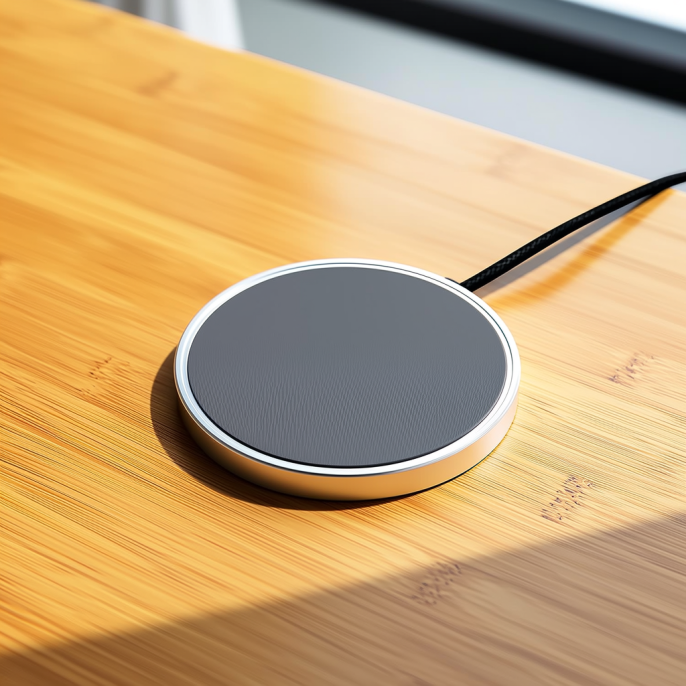
Put the three together and the takeaway is simple: one Qi2 magnetic charger, power bank, stand or car mount can now serve the iPhone 18, the Pixel 10 and a Galaxy S25 wearing a magnetic case. The accessory pool is converging, and the old habit of buying one Apple-specific and one Android-specific gadget is starting to loosen.
Still, 25W is not full speed everywhere. Samsung is stuck at 15W, and an older pad without a magnet yanks a new phone straight back to 5W BPP. The old warning bears repeating: Qi2-compatible on the box is not the same as Qi2-certified, and a compatible pad may be hardware-capped at 5W. Check the WPC certification number before buying rather than trusting the label.
For accessory makers this is a clear tailwind. The more universal the magnetic interface, the more models a single SKU can cover, and the OEM, ODM, design-customization and manufacturing chain all get a chance to sell the same magnetic pad to a wider audience. The flip side is that the power and certification gaps between brands must be stated clearly on the packaging instead of glossed over.
Magnetic wireless charging has moved from Apple's private feature to an industry-wide interface faster than many expected. For everyday buyers the rule is three short lines: check the certification number, check whether your phone has magnets built in, and know exactly how many watts your specific model can actually pull. Everything else is increasingly handled by chargers that look more and more alike.
This article is originally published by Shanwu. Please credit the source when reposting.
Copyright © 2026 Shanwu. All Rights Reserved.