
The worst part of a business trip is rarely the clothes you forgot—it's arriving at the hotel to find your phone, watch, and earbuds all dead. One socket and one cable can't feed three devices, and taking turns is slow and annoying. My take: stop packing cables and use a three-piece kit—a foldable 3-in-1 magnetic charger, a magnetic wireless power bank, and a GaN multi-port brick—to cover nearly every situation.
A foldable 3-in-1 charger is a permanent resident of my bag. It folds phone, watch, and earbud charging into a palm-sized block, and when opened the phone stands up as a stand for video. On a hotel nightstand it tops up all three overnight with no cable hunt. The catch is it needs external power, so at the hotel I plug it into a multi-port brick.
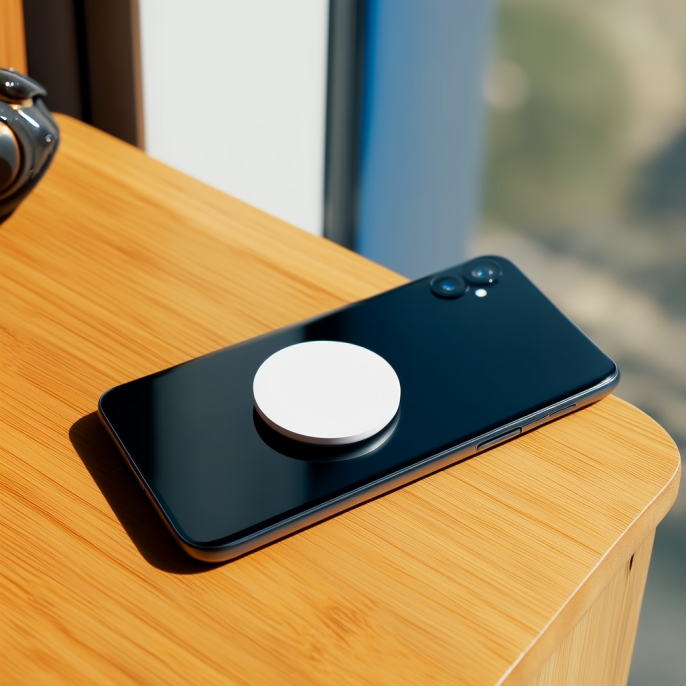
Trains and planes are where the foldable charger falls short—no socket. That's when a magnetic wireless power bank takes over. It sticks to the back of your phone and tops up without a cable, typically 15W on iPhones and up to 25W on newer Qi2 models. I charge it fully before boarding and just snap it on; half a day of use is covered by arrival.
On the flip side, a magnetic power bank has a downside: stuck to the phone's back, it makes the device bulky to hold, awkward for scanning QR codes, taking photos, or walking while reading. I treat it as emergency top-up on the move; longer stays go to the 3-in-1 plus the brick. The two complement each other better than either alone.
The GaN multi-port brick is the anchor. A 65W unit with two or three USB-C ports feeds phone, tablet, and laptop at once, allocating power so nothing starves. Any wall outlet at an airport, station, or hotel refills both the 3-in-1 and the power bank, so the whole kit is full by evening.
One hard rule before flying: a power bank above 100Wh needs airline approval, and over 160Wh is banned outright—and it must go in carry-on, never checked luggage. I stick to 10000–20000mAh magnetic banks, almost all under 100Wh, so security is no sweat. Cables and bricks can be checked; batteries stay with you.
Two small things hit the experience. First, the case: too thick or with metal or magnetic strips misaligns the magnet and drops speed, while a thin magnetic case actually helps. Second, wireless is simply slower than wired—fine for overnight or hotel trickle, but for a hurry, a cable wins. Treat it as top-up, not sprint.
With this combo, a week-long trip no longer means charging anxiety: the magnetic bank keeps the phone alive by day, the 3-in-1 revives watch and earbuds by night, and the brick refills the whole kit. Fewer cables, no socket wars. For multi-device travel, traveling light is about division of labor, not more gear.
This article is originally published by Shanwu. Please credit the source when reposting.
Copyright © 2026 Shanwu. All Rights Reserved.