
Stick a phone onto a magnetic power bank and the promised 25W often slips into the teens within ten minutes. The bottleneck is rarely the rated watts; it is heat. Coil and controller warm up together, the body gets hot, and the phone throttles its own intake first. That is why, over the past year or two, the pitch for high-power magnetic wireless charging has quietly moved from 'how many watts' to 'how well it holds the heat down.'
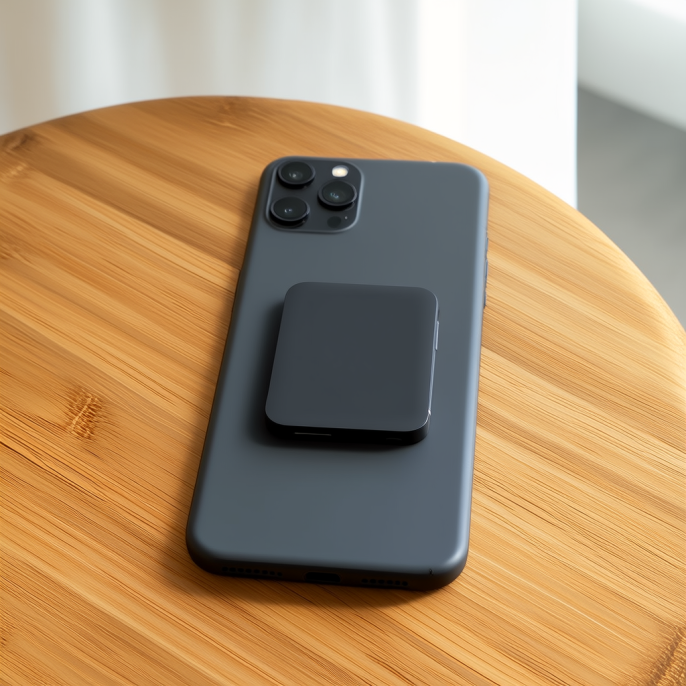
On September 3, UGREEN held a smart-living launch event at Gillette Stadium and pushed that idea further: the MagFlow Pro power bank is billed as the world's first liquid-cooled Qi2 25W magnetic charger. Instead of relying on a fan or passive graphite sheets, it carries a micro-pump inside that actively circulates coolant to carry heat away, with a Cyber Window on the side so you can watch the cooling work in real time. UGREEN says it takes an iPhone 17 Pro Max to 50% in 40 minutes and keeps peak temperature about 10℃ (18°F) below the industry benchmark, priced at $149.99.
The same event also showed the MagFlow Pro 3-in-1 magnetic stand, pairing 25W magnetic charging with thermoelectric (TEC) cooling that pulls the charging surface center down to about 11℃ (51.8°F); UGREEN claims 50% on an iPhone 17 Pro Max in 26 minutes, with a 15dB quiet fan and a display showing power and temperature, at $159.99. Below that sits the MagFlow 2-in-1 foldable magnetic charger: 25W, palm-sized when folded, at $59.99, taking high-power magnetic wireless charging from the desk into the travel pocket.
Line up the cooling approaches of recent years and the path is clear: passive graphite sheets first, then an active fan, then a thermoelectric (TEC) pad pressed against the surface, and now UGREEN has brought in micro-pump liquid cooling. None of these steps is a gimmick; each was forced by 25W at full speed. Coil and controller heat up together, and the moment thermal control loosens, the phone drops power and slows the whole session. Cooling has moved from a side feature to the deciding factor in high-power magnetic wireless charging.
For everyday users, terms like liquid cooling and TEC feel far from daily life, but the experience is immediate: at the same 25W rating, the better-cooled unit holds full speed longer and the phone does not stall the moment it warms up. For makers of magnetic wireless chargers, thermal design is becoming a fresh focus for customization, production, and sales. Whoever stabilizes structural cooling with certification can turn '25W without throttling' into a real selling point, not just a line on the box.
Whether liquid cooling becomes standard on 25W magnetic chargers is still open. The micro-pump, coolant, and sealed structure all add size and cost, and a portable power bank feels that most. But the direction is clear: once Qi2.2 lifted the ceiling to 25W, the next round is not about who claims the higher number, but who holds the heat down so full speed actually stays steady. The old wireless charger category has, once again, been pushed forward by cooling.
This article is originally published by Shanwu. Please credit the source when reposting.
Copyright © 2026 Shanwu. All Rights Reserved.