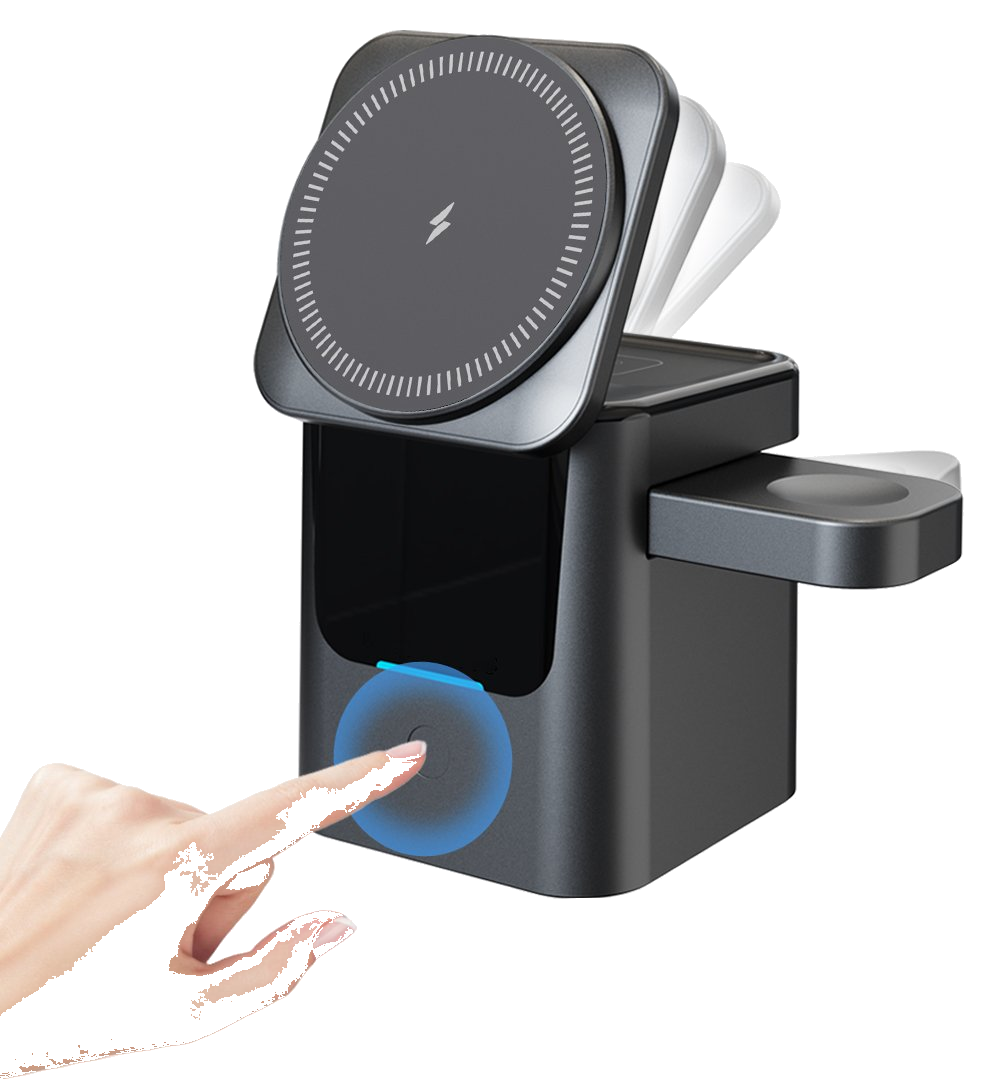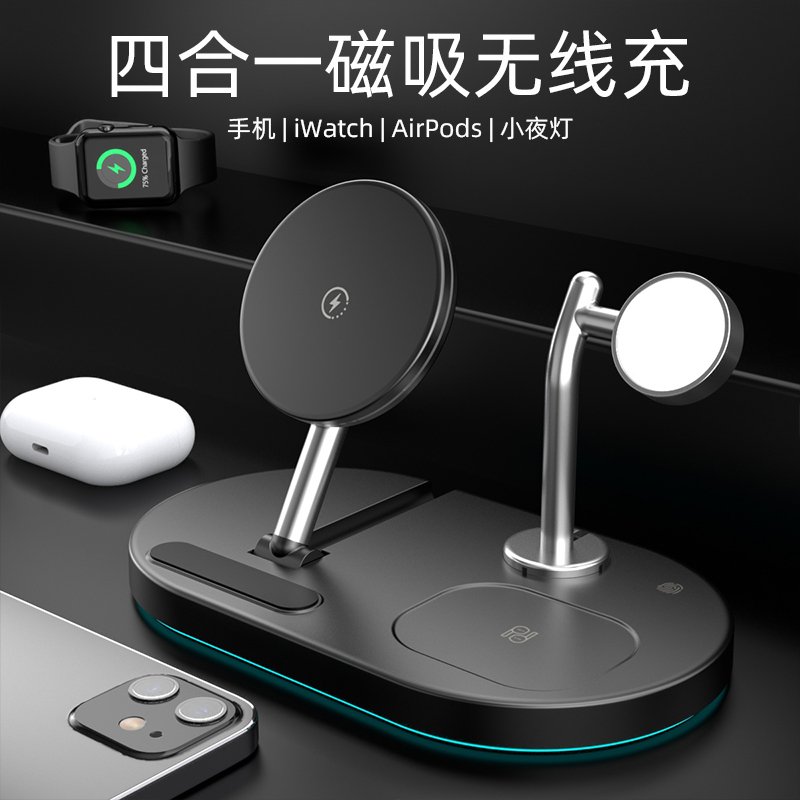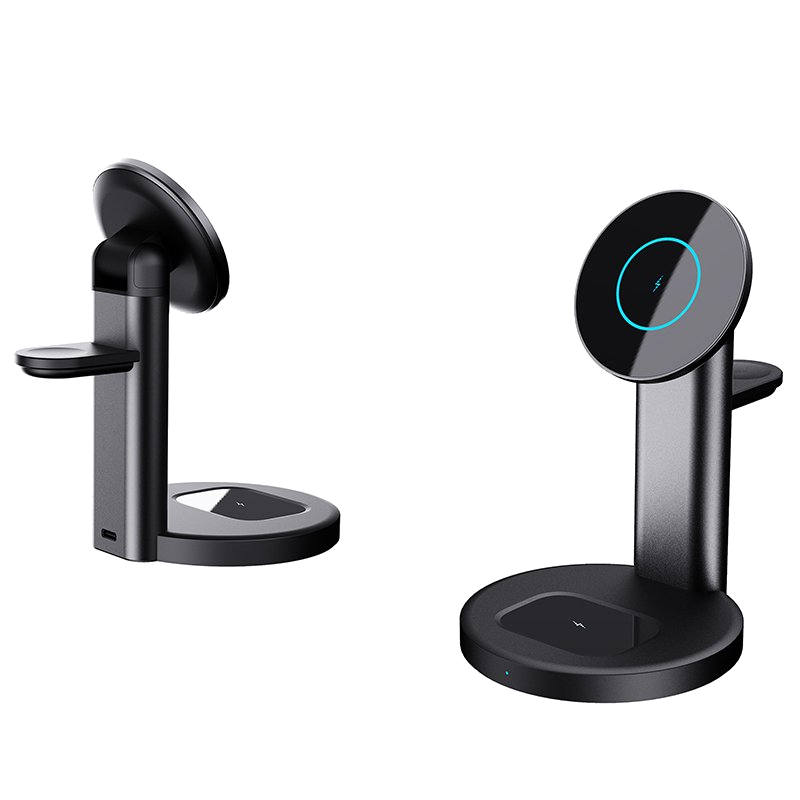
When I moved my magnetic wireless charger from the desk to the nightstand last year, the first thing that woke me up was not slow charging but a faint whirring at 3 a.m. Mine was a 25W magnetic model with an active cooling fan, silent in a busy study yet obvious in a quiet bedroom. Checking a few official specs taught me why: faster wireless charging dumps more waste heat at the coil, so makers either add a fan or use the metal body as a heatsink, and those two approaches differ a lot in how quiet they stay.
The World Health Organization is blunt about bedroom noise at night: for good sleep, steady noise in the bedroom should stay below 30 decibels, and once it passes 40 dB it crosses the threshold of the lowest observed adverse effect. In other words, the hum from a charger on your nightstand counts toward the same sleep budget as traffic outside the window.
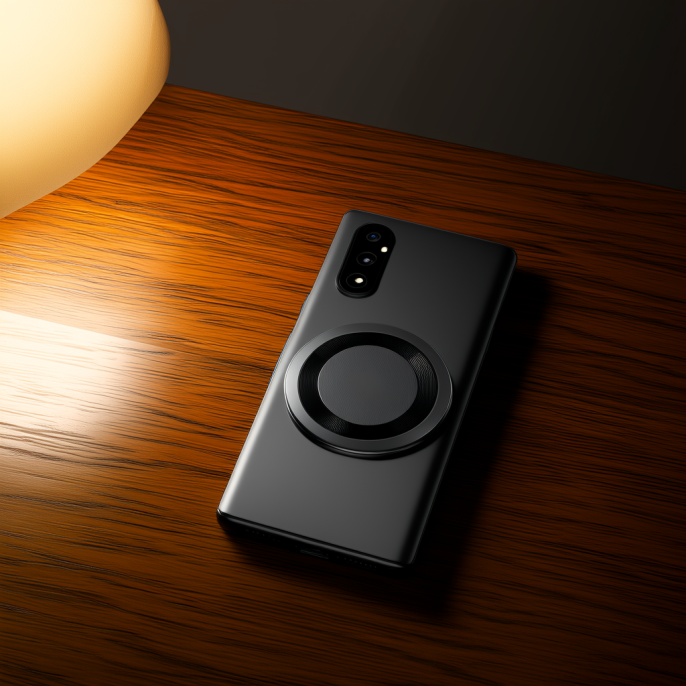
The flagship fan-cooled models publish concrete numbers. Anker's 25W three-in-one magnetic charging station with AirCool active cooling is rated at just 19 dB, staying under 29 dB even in Boost mode, and adds a Sleep mode that kills both fan and screen for overnight use. ESR's CryoBoost magnetic charger is rated 28 dB at one meter and spins only during high-wattage charging, stopping once the phone is full. Benks rates its ice-cooling magnetic charger at under 25 dB.
Those figures are measured at ideal settings, though. A teardown of Xiaomi's 30W vertical air-cooled charger is more telling: at a 30 dB ambient, the 5W low-power stage measured 35 dB, barely audible, but at 27W the noise jumped to 42 dB, clearly disturbing at night. The fan does not run constantly; it answers to the thermostat, spinning faster and louder the harder and hotter the charge gets.
If fan noise bothers you, pick a passively cooled wireless charger. Belkin and Apple's first-party magnetic chargers use the metal body as a heatsink and stay completely silent, at the cost of capping sustained power around 15W with more noticeable throttling after the first minutes. For someone who only trickle-charges overnight on the nightstand, that is actually the calmest choice: you sleep, and it fills the battery without a sound.
My rule is to match the scene: on a desk or living-room table where voices and ambient sound mask it, a 25W fan-cooled multi-device charger is fine, fast and cool. On a nightstand or in a nursery where silence is non-negotiable, stick to a passive model, or switch the fan model to Sleep mode and tuck it into the nightstand drawer with a gap for airflow. Never put a high-power air-cooled unit right next to the pillow.
Two quiet-killers get overlooked. One is the indicator light: on many vertical chargers the blue-white LED glows like a tiny nightlight in a dark room and annoys more than the fan, so check reviews for light complaints and prefer a model whose light can be turned off or faces down. The other is dust: air-cooled units swallow dust into the fan within months, changing its pitch, so a periodic soft-brush cleaning restores both sound and cooling.
The bottom line is simple: for quiet overnight charging, a passive model is the floor and any fan model must offer a Sleep or fan-off mode; if you want full 25W and do not mind the sound, keep the air-cooled unit in the study. When shopping for a wireless charger, put decibels and a silent mode on the list next to wattage, which beats chasing the highest number alone.
This article is originally published by Shanwu. Please credit the source when reposting.
Copyright © 2026 Shanwu. All Rights Reserved.