Once wireless chargers pushed past 25W, the headache for engineers stopped being speed and became heat. When a phone sits on the pad, the coil, power components, and control chips all crowd into the small space pressed against the back of the phone, and those heat sources stack up. As temperature climbs, the system lowers the charge rate or even pauses it. A Shenzhen maker called Lechong recently tried an almost counterintuitive fix: they pulled part of the circuit board out of the charging puck and tucked it into the middle of the cable.
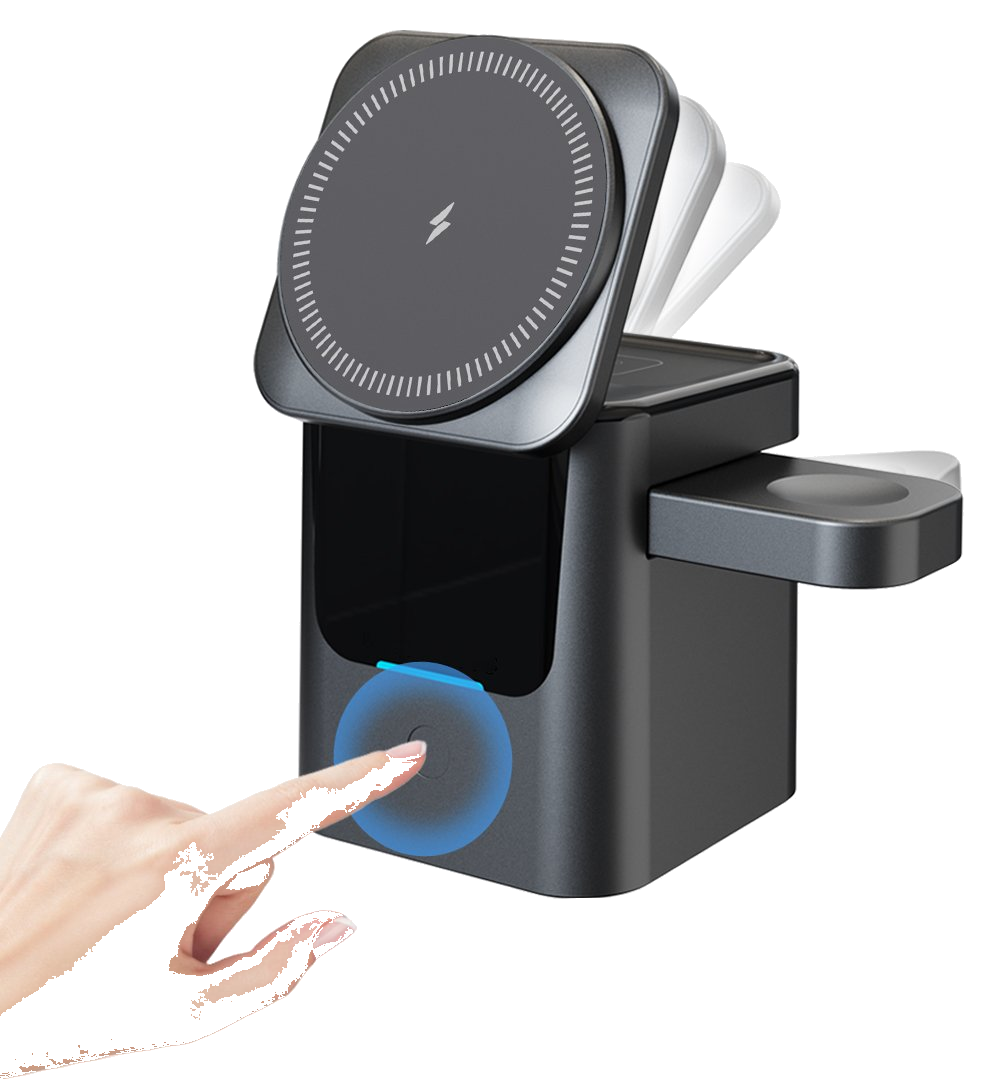
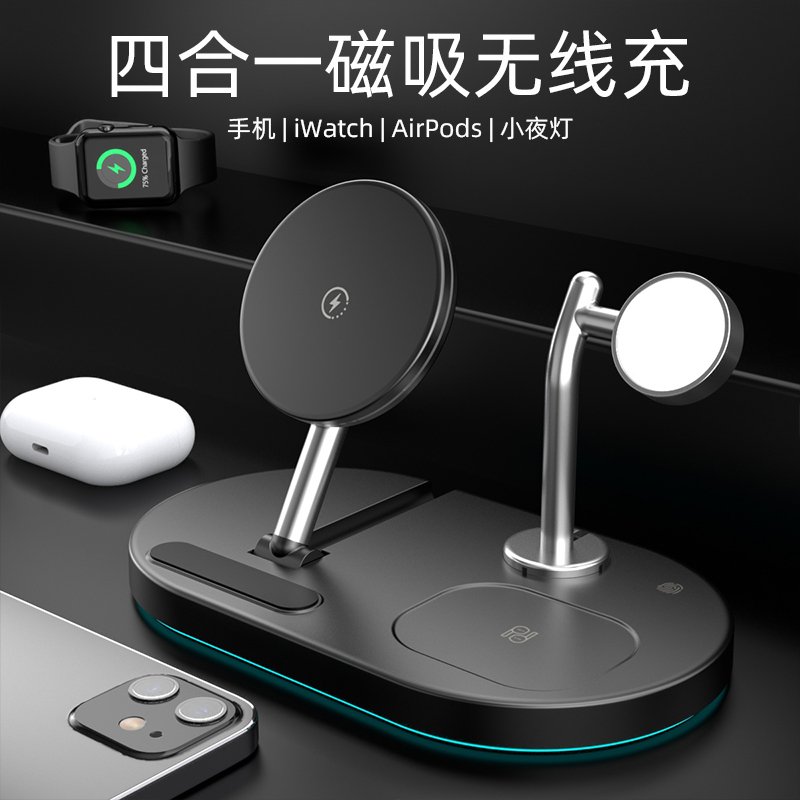
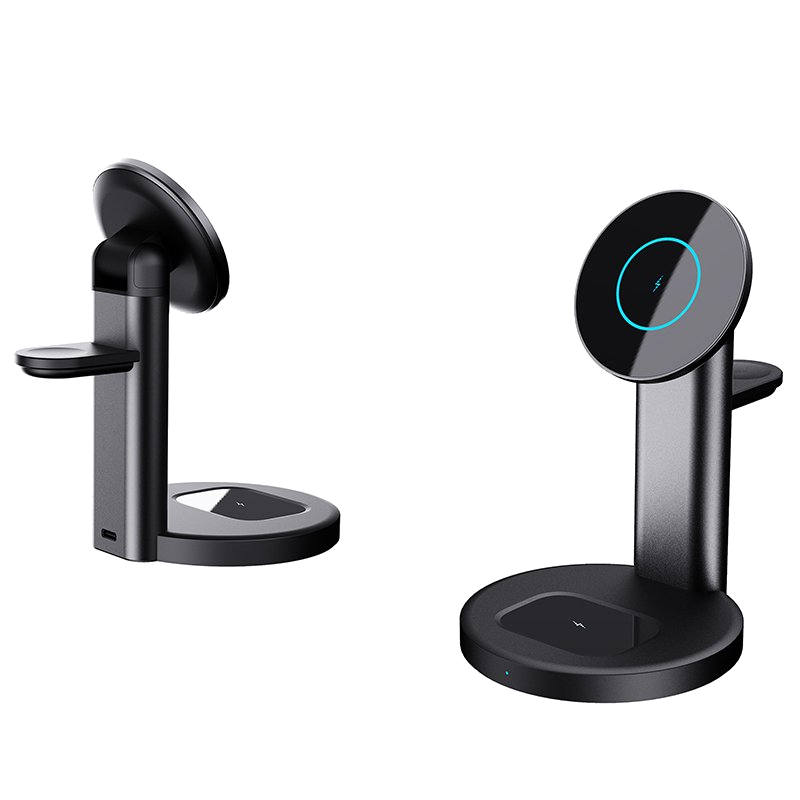
The product is the V32 / V32PRO, a 2-in-1 magnetic charger. The phone pad is rated Qi2 25W, with a small round 5W watch-charging module beside it, and both share one cable that runs to a USB-C port. Unlike the usual approach of cramming the coil and circuitry into the puck, Lechong built a separate circuit module into the middle of the cable and wrapped it in a metal shell. In effect, some of the parts that actually generate heat were evicted from the puck and relocated onto the cable.
The payoff shows up directly in temperature. A wireless charger's coil and power components already produce heat, and when everything is piled into the tight space against the phone's back, the heat compounds. Moving part of the PCB to the cable's midsection spreads the heat sources apart, and the metal shell helps the module shed heat on its own, so the concentration of warmth near the phone's back drops. At 25W — nearly 70% more than the old 15W — thermal control decides whether fast charging can actually hold. Once the phone gets hot, the system throttles and charging slows anyway, so clearing the heat buildup near the puck is really about buying headroom for sustained high-power charging.
On the spec sheet this is a genuinely WPC-certified product: brand LECHONG, model V32 / V32PRO, Qi ID 27708, certification version 2.2.1, supporting Qi2 25W magnetic fast charging. In other words, this is not a lab concept — the board-cable separation structure has been built into a mass-produced device. As a bonus, pulling some of the PCB out of the puck frees up internal space, letting the pad go thinner and giving the layout and cooling design more room to breathe.
Zoom out and this points to a shift in the industry: as wireless charging climbs from 15W toward 25W and beyond, the real contest is moving from raw spec-stacking to thermal design. Many products still fight heat by adding bigger heatsinks or fans, but Lechong's route attacks the problem at the structure itself, physically splitting the heat sources. For factories doing custom design and for the OEM/ODM supply chain, this kind of structural innovation tends to be a more durable competitive edge than simply chasing higher numbers — it directly determines whether a 25W magnetic charger can hold its speed over a long session.
For everyday users the change is concrete: trusting a Qi2-certified 25W magnetic charger matters more than reading the wattage printed on the box, and the effort a maker puts into cooling ultimately shows up in whether the phone keeps full speed after you set it down and whether the back gets too hot to hold. A small move like Lechong tucking the circuit board into the cable reveals the trend — the race in magnetic wireless charging is quietly shifting from who prints the bigger wattage to who manages heat better.
This article is originally published by Shanwu. Please credit the source when reposting.
Copyright © 2026 Shanwu. All Rights Reserved.