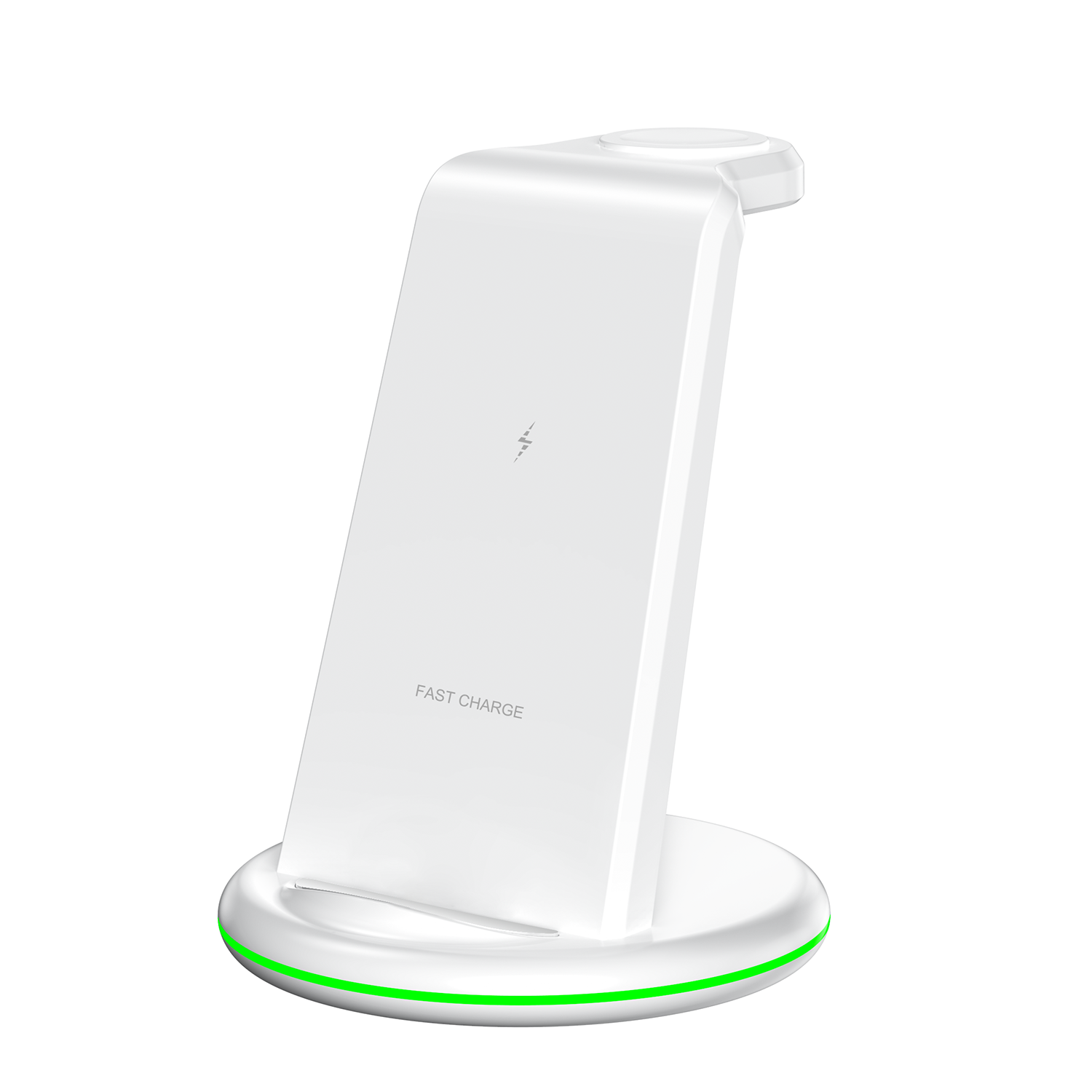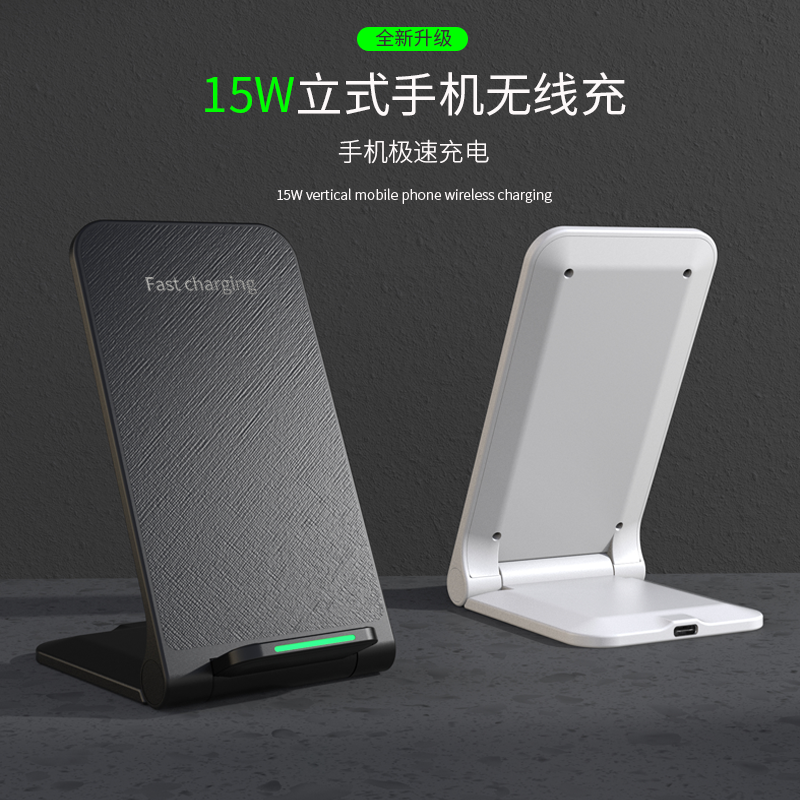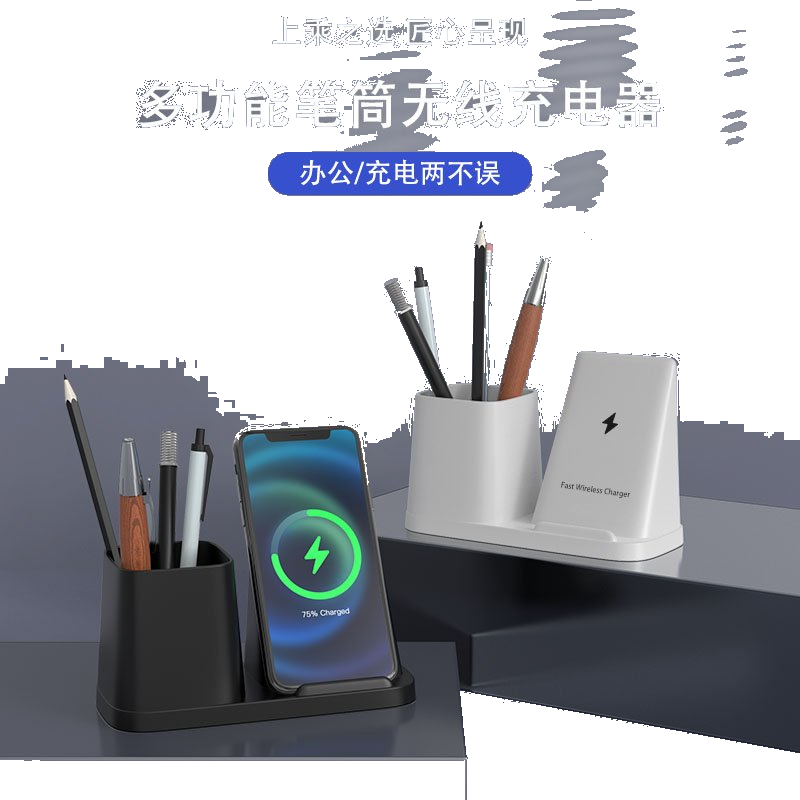
One line: a magnetic charger holds the phone onto the pad with magnets; a stand charger props the phone up like a dock. The first fixes "it won't charge because I placed it crooked"; the second fixes "I want to see the screen while it charges."
On efficiency, magnetic wins. The magnets hold the coils perfectly aligned, so almost no power is lost and a 25W pad runs at full speed. A stand without magnets, if the phone slips a little on the slope, can drop to 60–70% efficiency. That's why "stand plus magnet" combos are common now — a dock that also locks position with magnets.
Cooling tracks the shape too. A small magnetic pad sits flush against the phone back, concentrating heat in one spot. A stand holds the phone upright, so air moves along the back and heat sheds more naturally. At the same wattage, a stand often runs a touch cooler than a palm-size magnetic pad — noticeable in summer.
They own different spots. Bedside, desk and car vent suit a stand — turn it sideways for a clock face or navigation. Gym, travel and quick top-ups suit magnetic — snap and go, no aiming. In a shared home with all kinds of cases, magnetic alignment is far more forgiving.
It's not either/or. Many people keep a stand by the bed for the clock and carry a magnetic pad on the road. Pick on three things: does your phone support magnets, how much space you have (a stand needs depth), and whether you watch the screen while charging. If budget allows, a "stand + magnetic" combo gives you both alignment and experience.
Don't get tangled in the names. Magnetic handles alignment, the stand handles viewing, and the combo handles both. Work out where you mostly charge and whether you do anything else while charging, and the answer comes by itself.
This article is originally published by Shanwu. Please credit the source when reposting.
Copyright © 2026 Shanwu. All Rights Reserved.