
Since the iPhone 18 Pro and Pro Max went on sale on 18 September, the wireless line in the spec sheet still reads 25W, identical to the previous generation. With a compatible magnetic charger, Apple's stated result is 0 to 50 percent in about 30 minutes. The number did not move, yet accessory circles have been busier than usual. The question is not why Apple did not raise it, but why so many people bought a pad labelled 25W and never got close to it.
Start with the wall end. Apple's own guidance is that a 25W magnetic pad needs a 35W-or-higher USB-C adapter to reach full speed. Two-in-one and three-in-one docks trip people up more often, because the power budget is not the phone's share alone but the combined output for phone, watch and earbuds. So "I am using a 45W brick anyway" is not an argument; check the dock's stated input requirement and whether a suitable adapter is included. Underpower the adapter and even an expensive pad can only discount what the phone asks for.
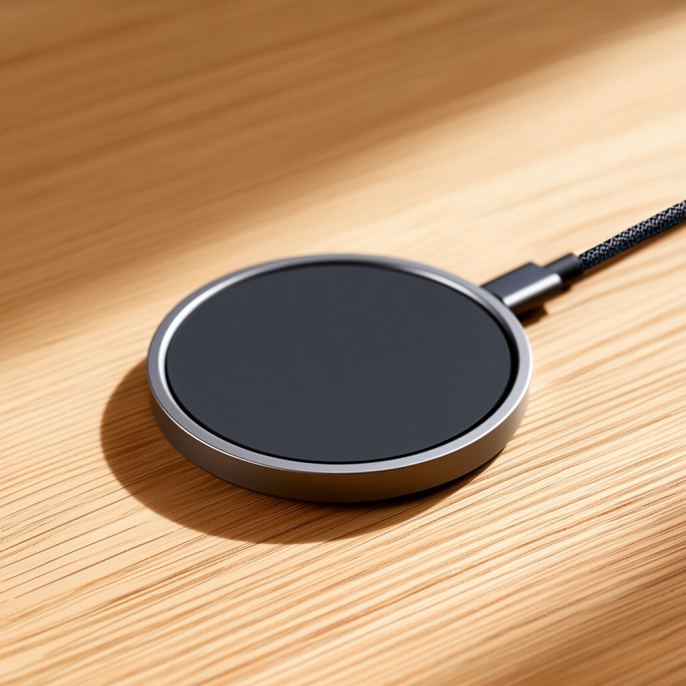
Now the pad end. Not every Apple MagSafe charger supports 25W; the earlier A2140 tops out at 15W, so check the model. With third-party hardware the wording on the certification matters: look for Qi2 25W specifically, because earlier Qi2-certified products cap at 15W, and "Qi2" on its own does not promise the higher rate. That explains a familiar pattern. The same pad felt unremarkable on an older phone and is no quicker on the new one, because it may have been running at 15W the whole time.
The third gate is heat, and it is the layer most often mistaken for a defect. Wireless charging works through electromagnetic induction, so its efficiency trails wired charging and the losses land on the back of the phone as heat. Engineers in the business put the numbers plainly: a 25W magnetic pad holds its peak for roughly 8 to 10 minutes, then settles to a sustained 18 to 22W, and the deciding factor is the surface temperature the phone reports, not how capable the charger is. So 25W on the label and 18W on the meter is not a fault. It is thermal management talking.
Three variables pull that sustained rate down: a thick case, a warm room, and heavy use while charging. On the other side, this generation did its homework on cooling. The vapor chamber grew to roughly three times its previous area, and the Pro Max battery in China went from 4,823mAh to 5,391mAh. In real tests a 25-minute magnetic charge peaked near 44°C and sat under 42°C most of the time, where the previous generation reached 46 to 47°C within 15 to 20 minutes under similar conditions. Lower temperatures mean longer stretches at 25W, and the difference is clearest on a bedside table.
Mobile use is the same story from another angle. A magnetic power bank is itself a heat source, and passively cooled packs get hotter as they work and then throttle their own output, so the 25W you paid for may only exist in the first few minutes. Actively cooled models have been measured holding around 36°C at full speed throughout. When picking a power bank, one question about the cooling method is worth more than another look at the rated wattage.
A few free habits claw back some efficiency. Apple's advice is to power the charger first and attach the phone after, so the charger can establish the conditions for maximum power delivery; if you did it the other way round, lift the phone off, wait three seconds and put it back. Do not sandwich a magnetic card wallet between phone and pad. And one counter-intuitive point: plugging in a USB-C cable while the phone sits on a magnetic charger will not speed anything up; it only complicates power allocation.
Set expectations correctly and the keyword for wireless charging this generation is steady rather than fast. The real gates have moved from wattage to adapter budget, certification wording and thermal design, true for buyers and just as true for the companies building the hardware. A desk or a bedside table is the right place for casual top-ups; when you are in a hurry, wired is still quicker. Now that 25W is table stakes, the convincing product is the one that holds it all the way through.
This article is originally published by Shanwu. Please credit the source when reposting.
Copyright © 2026 Shanwu. All Rights Reserved.