
My home is a typical case: a one-and-a-half-year-old who just learned to crawl everywhere, plus an orange cat that loves shoving anything off the table. When I bought a magnetic wireless charger for the bedside not long ago, it hit me late how many hazards it holds for kids and pets. Not the spooky radiation kind, but obvious ones: cables get chewed, the pad gets knocked off, and worst of all, the little magnets inside.
Start with the scariest one: magnets. Magnetic wireless chargers, magnetic power banks, and magnetic mounts all hide high-powered neodymium magnets far stronger than a fridge magnet. U.S. CPSC data is blunt: about 2,400 child magnet ingestions reached ERs from 2017 to 2021, and at least seven deaths since 2005. Swallowed, a few magnets can attract each other or other metal inside the gut, causing perforation, twisting, blockage, even sepsis. Most pass the small-parts cylinder, so to a toddler they are deadly little parts.
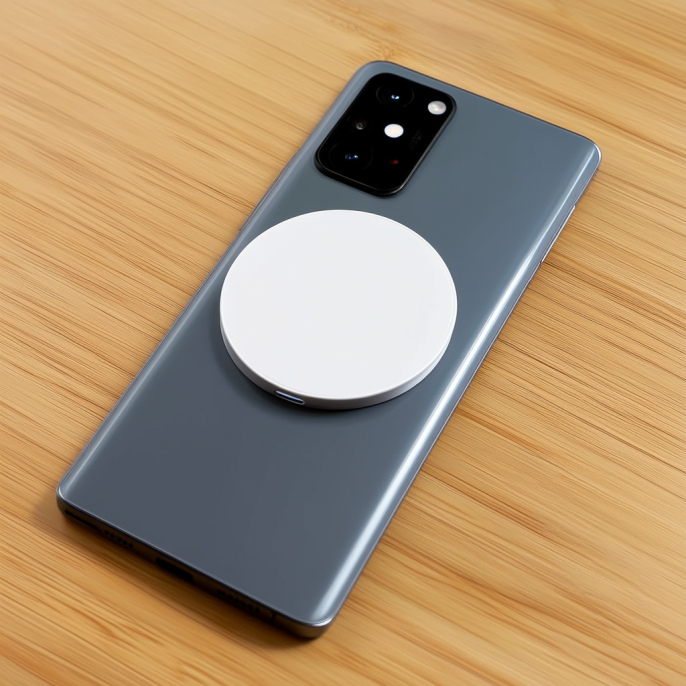
The fix is simple: keep magnetic accessories where children cannot reach, ideally a locked drawer or a high shelf; pick models with magnets fully enclosed and no loose small parts; if the shell cracks and exposes magnets or electronics, treat it as e-waste and replace it, do not keep using it. While kids are small, a wall-mounted pad beats one left casually on the coffee table.
Cables are the second trap. Dogs chew them, cats pull them, toddlers trip on them — almost every home has been there. The whole point of wireless charging is fewer exposed wires: tuck the one power lead behind the desk with a cable channel, or go for an under-desk module so the cord essentially leaves the living space. Under-desk kits hide the transmitter 3 to 12 mm below the surface, mid-range ones reach 10 to 30 mm, and they still charge through wood or glass at 70 to 85 percent efficiency.
Third is heat. Wireless charging loses some energy as heat — that is physics, not bad quality. A proper unit feels warm, not hot. The rule is not to set it on pillows or plush toys that trap heat, and not to stack it on a soft bed overnight. Testers in nursery setups advise placing the pad on a hard surface like wood, ceramic, or metal, feeling it after ten or fifteen minutes, and if it is too hot to touch, moving it to ventilation or charging in stages rather than crowding several devices on one pad all night.
Fourth is tipping. A flat pad has a low center but also a small footprint; one tail swipe from a cat or a toddler's grab and it is on the floor — a cracked shell is minor, a phone on someone's foot is not. Look for three things: a non-slip silicone base, a wall-mount or stand version, and a weighted base. A standing magnetic mount holds the phone by magnetism, so it is harder to knock off than a flat pad; for a flat 3-in-1 block, a non-slip mat and a book pressed beside it help.
Fifth are splashes and the radiation worry. On a kitchen counter or next to a bedside cup, a spill ruins an ordinary pad, so pick at least IPX4 splash-rated or just keep it away from water. The radiation part is not worth losing sleep over: wireless charging uses an extremely low-frequency non-ionizing field, far weaker than Wi-Fi or phone signals, and bodies like the FDA and WHO consider daily use safe, including for kids and pets. The real risks have always been electrical and thermal, not the field itself; if someone has a pacemaker, keep the pad at least 15 cm from the chest.
For buying, families with kids and pets should follow a few rules: choose Qi2 or Qi2.2 certified, since alignment is steadier and thermal and foreign-object protection are more reliable; prefer magnetic or standing non-slip models that are harder to knock off than flat pads; a 3-in-1 cuts the total cable count at home; and wall-mounted or under-desk options move both wires and pad out of little hands and paws. Fixing the charging spot at a height children and pets cannot reach does more than buying an expensive pad.
This article is originally published by Shanwu. Please credit the source when reposting.
Copyright © 2026 Shanwu. All Rights Reserved.