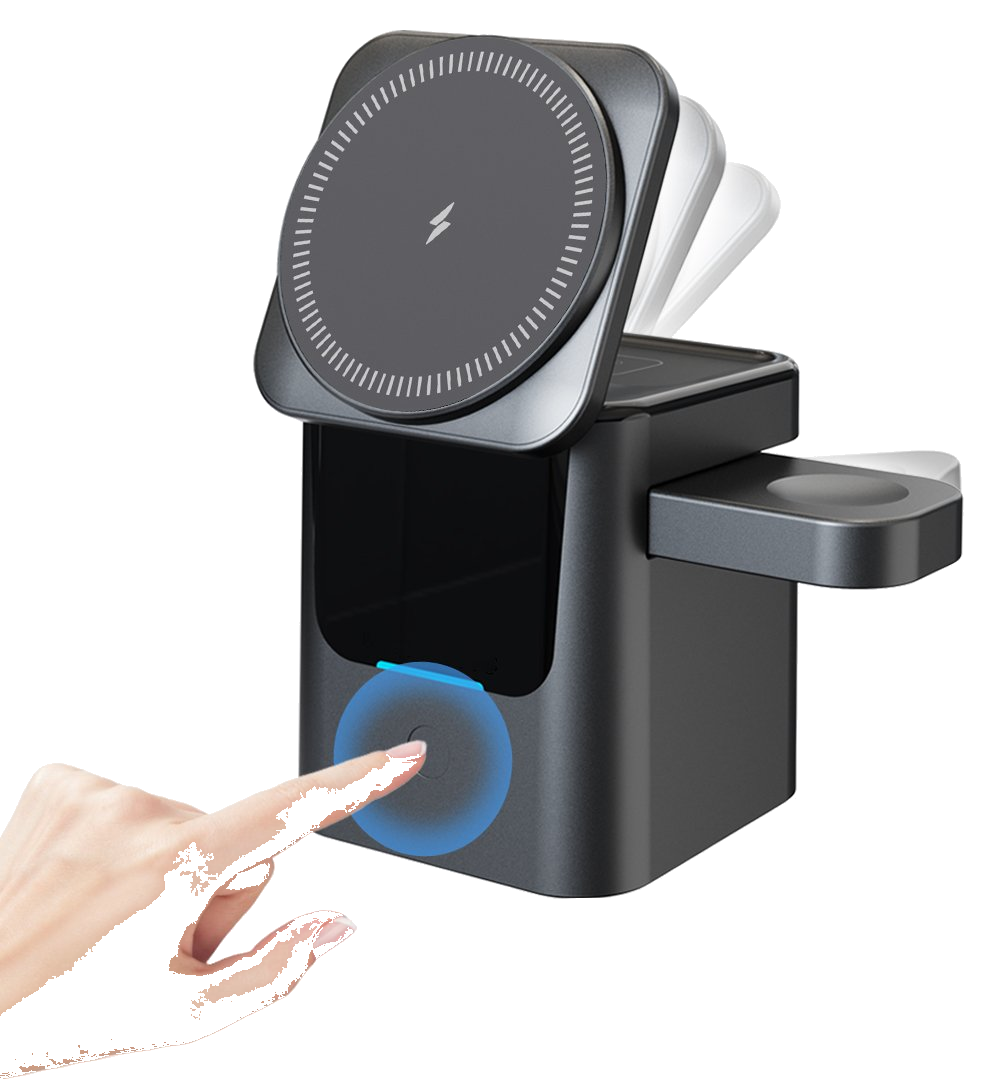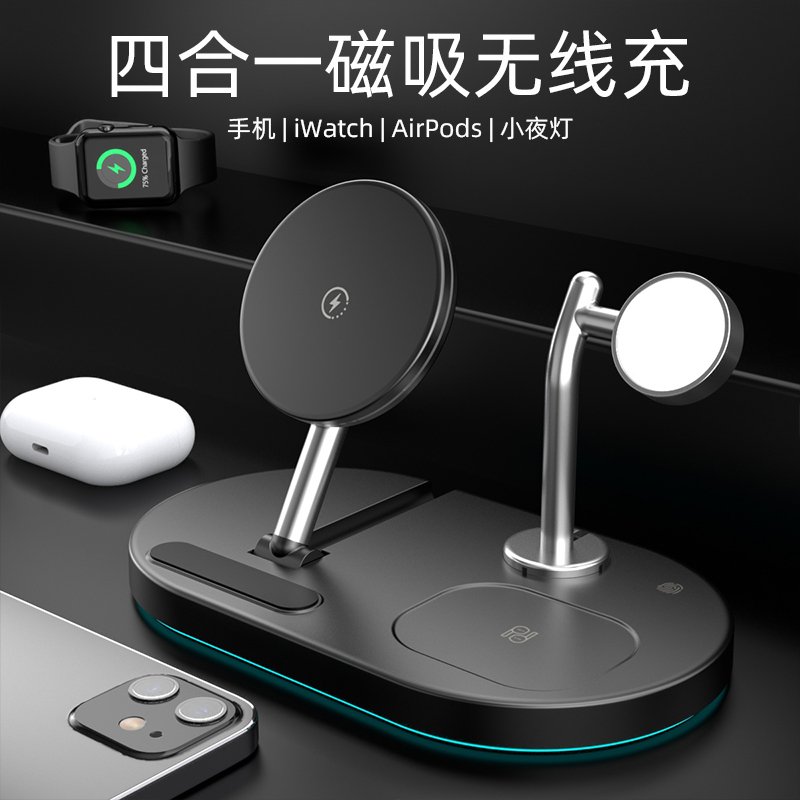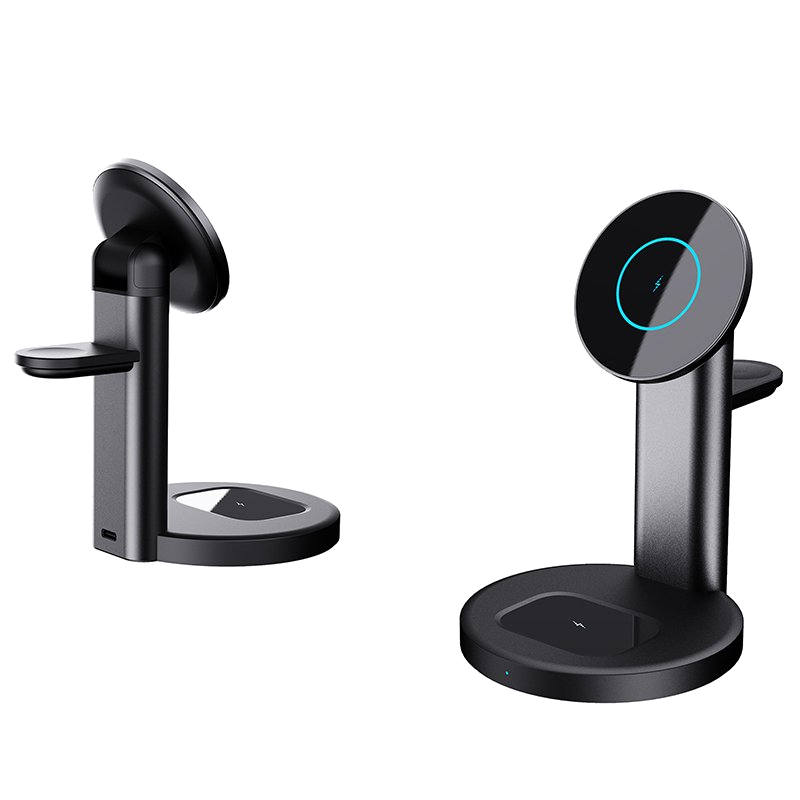
Last week I dropped my phone onto the bedside wireless charging pad, went to take a shower, and came back to find the phone still at 30% while the pad was too hot to touch, with a message on screen: "Foreign object detected, charging stopped." I thought it was broken. Then I lifted the phone, flicked a stray coin out from between the pad and the case, put the phone back, and it charged normally. When a pad gets hot but the phone doesn't charge, the first move shouldn't be blaming the charger — it should be checking whether a metal object has landed on the charging surface.
Wireless charging runs on electromagnetic induction. The coil inside the pad carries a high-frequency alternating current and induces current in the receiving coil on the back of the phone. That alternating magnetic field is meant for the phone's coil, but if a piece of metal — a coin, a key, even the edge of a metal phone case — sits in the charging zone, the same field induces circulating currents in that metal, technically called eddy currents. Those currents are blocked by the metal's own resistance and turn straight into heat, the familiar I²R loss. The metal never takes part in charging; it just gets warmed up inside the field, and that is exactly the hazard FOD exists to prevent.

FOD stands for Foreign Object Detection, a safety feature the Wireless Power Consortium (WPC) makes mandatory in the Qi standard. The idea is straightforward: it reconciles the books with two methods. One is the power-loss method — the pad knows exactly how much power it puts out, and the phone reports how much it actually receives; if the gap stays above roughly 500 milliwatts, something else is stealing and heating the energy, so power cuts off. The other is Q-factor sensing (available on Qi 1.2 and above, EPP tier): a metal object noticeably lowers the coil's quality factor Q, and the pad flags a foreign object the moment it sees Q drop. A compliant Qi-certified pad essentially runs both checks.
So how low must FOD keep the temperature? In Part 7 of the Qi specification (mapped to IEC 63563-7:2025), WPC defines four "representative foreign objects" for testing — a steel disc, an aluminum ring, a 0.1 mm aluminum foil, and an aluminum disc — and requires their surface temperature to rise no higher than 60°C (the thin foil gets an 80°C ceiling), meaning a maximum 40°C rise from a 20°C room. Setting that red line at 60°C guarantees that even if metal does land on the pad, a person reaching for it won't get burned. In other words, FOD doesn't promise the pad never warms up; it promises it never warms up enough to hurt.
The usual troublemakers are rarely big chunks of iron; they're the small things you set down without thinking. A coin, a key, a paperclip, a folio case with a metal clasp, or one of those magnetic mounting stickers stuck to the phone back — they're tiny and land right in the center of the charging zone where eddy currents concentrate most. Another often-overlooked item is a card with a magnetic stripe, like an access card or a bank card: the wireless charger's field not only heats it but can also erase the stripe. Some metal phone cases aren't thick, but they wrap the whole phone, effectively laying a sheet of metal right over the coil, so the pad either throws repeated errors or simply refuses to charge.
Once a compliant pad decides there's a foreign object, it acts cleanly: it cuts the high-frequency output immediately and shows a clear "foreign object detected / charging stopped" message on the phone or an indicator light, instead of silently forcing the charge through. Here's the trap to watch — plenty of cheap pads without proper Qi certification either never really implemented FOD or set the threshold so loosely that a small coin slips past, or conversely throw false "foreign object" errors and refuse to charge. So "it charges" and "it's safe" are two different things; when you see that warning, don't rush to curse the product — first ask whether you put something wrong on it.
Avoiding foreign-object heating really comes down to a few effortless habits. Clear the charging surface before you start — don't fling the phone down together with keys and loose change. If your case feels obviously metallic, charge once without it; if it goes in fine, keep it, but if errors keep popping up, swap the case. Never press a wallet holding an access or bank card onto the pad. When buying a charger, look for the Qi or Qi2 certification mark; certified products at least passed independent-lab FOD testing. Make a habit of "phone only on the pad," and you dodge nine out of ten foreign-object heating incidents.
At the end of the day, foreign object detection is the most underrated safety feature in wireless charging. It stays silent until the moment it blocks a piece of metal that's already heating up, and too many people then think, "why does this pad keep throwing errors?" Next time you see a "foreign object detected" notice, don't get annoyed and don't force your way past it — what it just stopped could be a coin hot enough to redden your fingertip. Keep the charging surface clean and let it do its quiet job; that beats everything else.
This article is originally published by Shanwu. Please credit the source when reposting.
Copyright © 2026 Shanwu. All Rights Reserved.